
Corporate Governance and Anti-Corruption

Management Approach
The Board of Directors has established a Company Handbook in written form, encompassing the organizational culture (vision, mission, and values), Code of Business Conduct, Code of Conduct for Directors, Management and Employees, Corporate Governance, Corporate Social Responsibility, and Anti-Corruption Policy. All directors, executives, and employees are required to acknowledge, understand, and strictly adhere to these provisions. Compliance monitoring mechanisms are in place, and adherence is designated as a binding obligation for all directors, executives, and employees. The Board further promotes the dissemination of the Company Handbook to all stakeholders and relevant parties through the Group's website, with an annual review of the Handbook mandated to ensure currency and continued relevance.
Board Governance Structure and Roles and Responsibilities
Board Structure and Roles
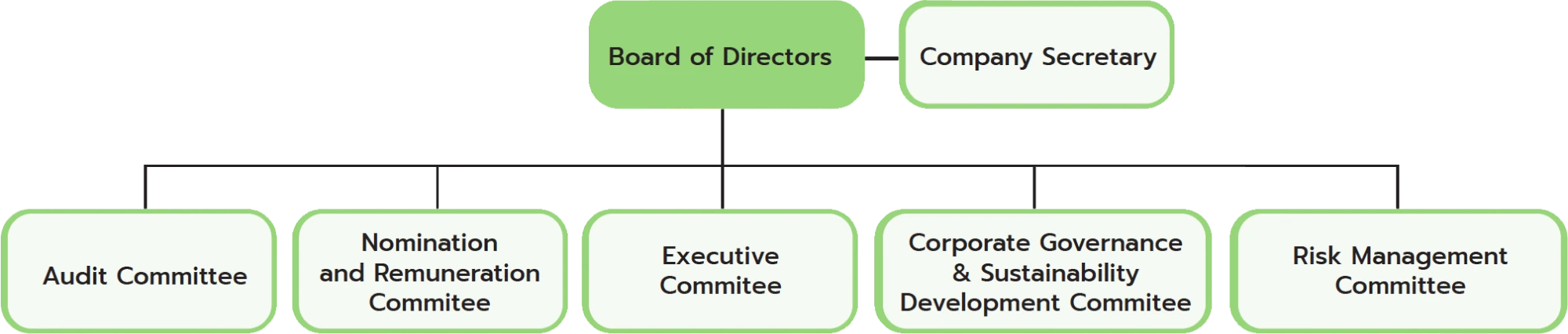
The Board of Directors comprises distinguished individuals with diverse knowledge, expertise, and experience as reflected in the Board Skills Matrix — encompassing essential competencies in strategy, energy innovation, and ESG-related sustainable development. All directors are committed to fulfilling their fiduciary duties with diligence and integrity, in the best interests of shareholders and all stakeholders. The Board plays a pivotal role in setting the Group's vision and strategic policies, and appoints sub-committees to provide in-depth deliberation of specialist matters. The Board further oversees management and the company secretary in ensuring strict compliance with applicable laws, regulations, and the Code of Business Conduct — establishing a transparent, accountable, and highly effective governance mechanism across the Group. The structure, roles, and responsibilities of the Board of Directors and its sub-committees, together with key operational details, are set out as follows:
Roles and Responsibilities of the Board of Directors and Sub-committees
- Define the Group's vision, strategy, policies, and operational direction.
- Oversee management in executing approved policies effectively and efficiently to maximize value for the Group and shareholders.
- Be independent from management to monitor operational performance, assess executive conduct, and determine remuneration.
- Review and screen operational direction, business plans, and strategies; oversee business operations in alignment with Board-approved policies, objectives, action plans, business strategies, and budgets.
- Review the Group's operational regulations and procedures manuals.
- Review financial reports, data completeness, and assess the appropriateness of accounting principles in the financial statements.
- Review to ensure that management has established adequate and appropriate internal controls — including IT system internal controls — that sufficiently cover all potential risks, including corruption risk, as well as the approach for communicating the importance of internal controls throughout the organization.
- Review the effectiveness of internal audit performance against established standards.
- Establish risk management policies; oversee and support effective risk management covering all business activities of the Group, including corruption risk; review and assess measures to maintain risks within acceptable levels.
- Monitor implementation, review risk management reports, and ensure the adequacy and continuity of risk management practices.
- Review corporate governance policies and practices; plan CSR and stakeholder-related activities.
- Advise on the development of a sustainability policy framework aligned with international standards and meet stakeholder expectations for sustainable growth.
- Formulate sustainability and climate change policies consistent with relevant laws and regulations across economic, social, environmental, and governance dimensions, and assess sustainability-related risks and opportunities.
- Review director and senior executive recruitment policies; nominate and select candidates with appropriate integrity, ethics, and qualifications.
- Review director and senior executive performance evaluation systems.
- Oversee succession planning and senior executive development plans.
- Oversee director development plans to enhance knowledge, understanding of roles, and relevant laws and regulations.
- Review remuneration structures and propose remuneration for the Board, sub-committees, and senior executives.
Details of the evaluation of the duty performance of the board of directors and Sub-committees in 2025
| List of directors | Assessment form | Grade / Average score received | Grade / Full score |
|---|---|---|---|
| Board of directors | Group assessment | 95.16% | 100% |
| Self-assessment | 97.11% | 100% | |
| Cross-assessment (assessment of another director) | None | None | |
| Executive Committee | Group assessment | 95.58% | 100% |
| Self-assessment | 96.42% | 100% | |
| Cross-assessment (assessment of another director) | None | None | |
| Risk Management Committee | Group assessment | 95.67% | 100% |
| Self-assessment | 95.33% | 100% | |
| Cross-assessment (assessment of another director) | None | None | |
| Corporate Governance and Sustainability Committee | Group assessment | 96.88% | 100% |
| Self-assessment | 98.30% | 100% | |
| Cross-assessment (assessment of another director) | None | None | |
| Nomination and Remuneration Committee | Group assessment | 95.93% | 100% |
| Self-assessment | 98.63% | 100% | |
| Cross-assessment (assessment of another director) | None | None | |
| Audit Committee | Group assessment | 98.21% | 100% |
| Self-assessment | 96.97% | 100% | |
| Cross-assessment (assessment of another director) | None | None |
Board Composition
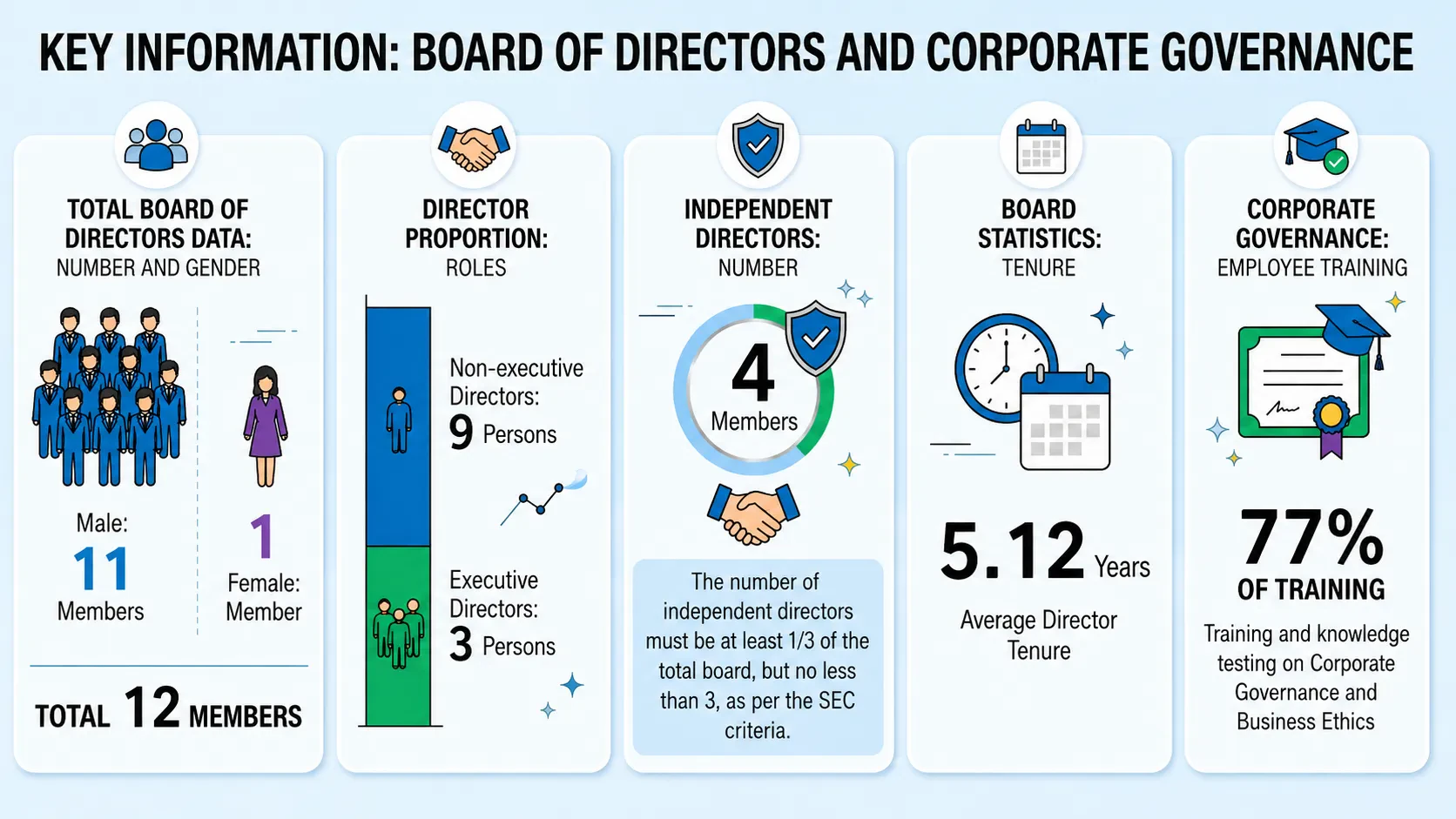
The Group places high importance on a well-balanced Board structure to ensure efficient and transparent decision-making. The Board of Directors currently comprises 12 members, with the following composition:
Director Qualifications and Skills
The Board of Directors possesses a diverse qualifications and skills aligned with the Group's business strategy. A below Board Skills Matrix is established based on directors’ experience, educational background, and training.
Board Skills Matrix
- Chairman of the Board (Non-Executive Director)
- 17 years 9 months
- Economics
- Insurance and Life Assurance
- Law
- Negotiation
- Leadership
- Independent Director
- 13 years 6 months
- Energy and Utilities
- Engineering
- Internal Audit
- Risk Management
- Governance
- Independent Director
- 15 years 1 month
- Law
- Internal Audit
- Risk Management
- Governance
- Negotiation
- Director (Authorized Director)
- 10 years 8 months
- Banking
- Petrochemicals and Chemicals
- Information and Communication Technology
- IT Security
- Engineering
- Internal Audit
- Independent Director
- 5 years 8 months
- Securities and Capital Markets
- Engineering
- Finance
- Fund Management
- Business Administration
- Director (Executive Director)
- 1 year 8 months
- Business Administration
- Accounting
- Media and Publishing
- Director (Non-Executive Director)
- 1 year 8 months
- Petrochemicals and Chemicals
- Business Administration
- Energy and Utilities
- Industrial Materials and Machinery
- Sustainability
- Director (Executive Director)
- 1 year 5 months
- Finance
- Engineering
- Business Administration
- Change Management
- Leadership
- Director (Executive Director)
- 1 year 5 months
- Banking
- Securities and Capital Markets
- Finance
- Engineering
- Business Administration
- Director (Non-Executive Director)
- 1 year 5 months
- Economics
- Business Administration
- Information and Communication Technology
- IT Management
- Director (Non-Executive Director)
- 1 year
- Economics
- Business Administration
- Insurance and Life Assurance
- Finance
- Investment and Securities
- Independent Director
- 1 month
- Insurance and Life Assurance
- Public Administration
- Law
- Auditing
- Internal Audit
Note: (1) Tenure as of 31st December 2025
Director Training and Knowledge Development
New Director Orientation
Newly appointed directors are provided with comprehensive information about the Group, including regulations and key business information relevant to their directorial duties. The Company Secretary is responsible for furnishing details on organizational structure, business nature, Group business structure, Articles of Association, and the Company Manual. This consolidates key corporate policies and practices, covering organizational culture, Code of Business Conduct, Code of Conduct for Directors, Management and Employees, Good Corporate Governance, and Anti-Corruption Policy. This ensures that newly appointed directors have a thorough understanding of the business context and applicable regulations prior to commencing their duties.
The Group actively encourages directors and senior executives to continuously develop their knowledge and exchange experience to elevate the effectiveness of both the full Board and sub-committees, through the following actions:
Director and Senior Executive Remuneration
The Nomination and Remuneration Committee is responsible for establishing director remuneration policies and criteria, and presenting these to the Board of Directors for subsequent shareholder approval. The remuneration determination process takes into account the appropriateness of the remuneration in relation to directors' roles, responsibilities, and contributions.
In addition to full Board remuneration, the Group takes into account the additional responsibilities arising from sub-committee membership. Sub-committee remuneration is submitted by the Board for approval at the shareholders' meeting. Senior executive remuneration is reviewed by the Nomination and Remuneration Committee and submitted to the Board of Directors for final approval.
Conflict of Interest Prevention and Management
The Group is committed to transparent and equitable business conduct, underpinned by the following key conflict of interest prevention measures:
Anti-Corruption and Anti-Bribery
Policy and Risk Management
The Group has established a robust risk management system that covers corruption and fraud risks across all operational processes. Risks and management measures are reviewed on a regular basis to ensure that internal controls remain appropriate to evolving circumstances and that risks are maintained at acceptable levels in accordance with international standards
High-Risk Operations & Corruption Risk Assessment
The Group has established rigorous policies and operational procedures to manage corruption and misconduct risk across all functions, with particular emphasis on activities assessed as High-Risk Operations, aligned with the Group's zero-tolerance principle, as follows:
- Procurement Process: For large-scale, high-risk projects, mandatory review by the Procurement Committee is required at every stage to ensure justification and full transparency throughout the procurement process.
- Internal Controls and Audit: Robust internal controls are in place, including segregation of duties and multi-level approvals. The Internal Audit function conducts regular reviews of high-value project processes to prevent corruption.
- Ongoing Risk Assessment: Corruption risk assessments are conducted periodically across all business units and operational areas, including licensing and tax management, to ensure measures remain responsive to evolving risks.
- Training and Whistleblowing: Mandatory anti-corruption training is provided with particular emphasis on employees in high-risk roles, supported by reliable whistleblowing channels with robust whistleblower protection mechanisms.
Ethics Promotion through Communication and Training
To ensure that the high-risk operations controls described above are effectively implemented in practice, the Group has established structured communication and training processes to build a Zero-Tolerance Culture, as follows:
Whistleblowing and Complaints Mechanism
Recognizing the importance of enabling both internal and external stakeholders to participate in transparent corporate governance, the Group has established formal whistleblowing and complaints policies and mechanisms. These mechanisms address suspected violations of laws, the Business Code of Conduct, or any conduct suspected of giving rise to corruption, with the following operational structure and protection measures:
Operational Structure and Oversight
Reporting Channels
Stakeholders may submit whistleblowing reports along with supporting evidence through multiple available channels.
Whistleblower Protection
The anonymity mechanism allows whistleblowers to submit reports confidentially or remain entirely anonymous, ensuring their personal safety and alleviating any concerns about retaliation.

Performance
Indicator 2025
Number of material corporate governance complaints
0
Number of material violations of the Business Code of Conduct
Business Ethics
0
Corruption or Bribery
0
Money Laundering or Insider Trading
0
Conflict of Interest
0
Customer Data
0
Environment, Health and Safety
0
Human Rights Violations
0
Discrimination or Harassment
0
Annual General Meeting Quality Assessment Results
The Company holds an Annual General Meeting (AGM) each year to present operational performance to shareholders. In 2025, the Company achieved a perfect score of 100% in the AGM Quality Assessment conducted by the Thai Investors Association, a distinction maintained for nine consecutive years.

Customer Relationship Management



The Group adheres to a customer service code of conduct that emphasizes Good Corporate Citizenship alongside corporate governance that integrates social and environmental responsibility as a shared business standard. We conduct continuous customer satisfaction assessments within our Biodiesel and Renewable Energy business units. These evaluations focus on ease of communication, progress reporting, problem-solving efficiency, and the overall quality of products and services. The Group is committed to fostering sustainable development among our business partners by providing guidance and support, including knowledge sharing, performance evaluations, and constructive feedback for improvement. We have established the "EA Customer Service Code of Conduct" to guide our partners in acting as responsible corporate citizens, ensuring tangible commitment to social and environmental governance and maintaining high shared business standards.
Furthermore, the Group has established a formal “Supplier Code of Conduct”. This code is built upon principles and guidelines that strictly adhere to all relevant laws and regulatory requirements. It is also fundamentally aligned with internationally recognized charters and global standards, such as:


Supplier’s Code of Conduct
For further information, please refer to
Business Code of Conduct
Performance
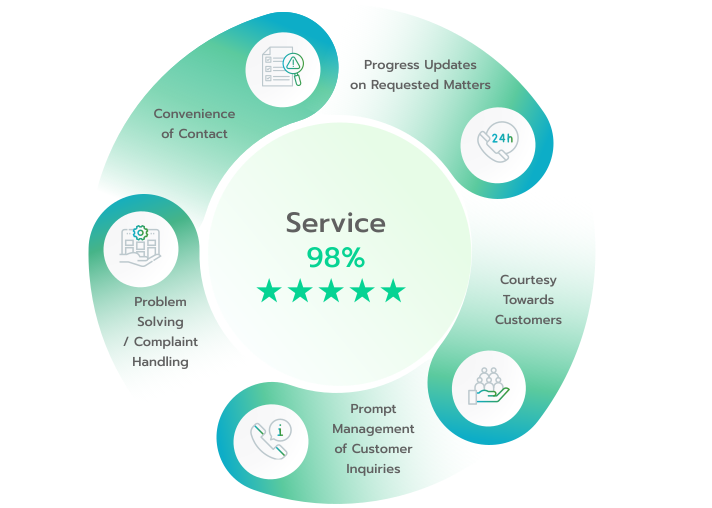
Product Quality Meets Standards.
Delivery of Products / Services Meets Customer Needs.
Proper Condition of Packaging Upon Receipt.
Technical / Product Service Support.
Resolution of Occurred Problems.
Achieve a satisfaction level of no less than 90%


Sustainable Supply Chain Management



Management Approach
EA Supplier's Code of Conduct
The Group has established the EA Supplier's Code of Conduct which is a set of requirements mandating supplier compliance with ESG and human rights criteria, covering the following principal areas:
Governance Structure and Roles and Responsibilities
The Group has established a supply chain management governance mechanism spanning from policy to operational levels, to ensure that all activities are aligned with the Group's sustainability vision and objectives, as follows:
- The Board of Directors and Chief Executive Officer: Provide overarching oversight of supplier management operations and the Supplier ESG Program, ensuring strategic alignment and that the program receives the highest priority in an organizational.
- Head of Supply Chain Department: Responsible for the continuous review of procurement practices to ensure that business requirements and organizational expectations remain aligned with the Supplier Code of Conduct and ESG requirements, with progress and outcomes reported through the management hierarchy.
- Procurement Committee: Responsible for reviewing and approving procurement decisions for high-value projects to maintain transparency and good corporate governance.
- Procurement Department: Serves as the primary executing body for Supplier Selection, Pre-Risk Assessment, and ESG-based supplier evaluation, as well as communicating guidelines to suppliers and relevant stakeholders.
- Relevant Internal Functions: Department Training is conducted regularly to communicate guidelines and ensure a shared understanding among procurement staff and internal stakeholders.
Supply Chain Management Processes and Measures
The Group is committed to a Sustainable Supply Chain Management Framework, emphasizing the integration of ESG dimensions into business processes to mitigate risk and create shared value throughout the value chain. The key processes are as follows:
- Quality Assurance and Compliance: Covering product quality, safety, and compliance with applicable laws and regulations.
- ESG Management: Assessing alignment with Occupational Health and Safety (OHS) policy and environmental management, and encouraging suppliers to report on environmental impacts, human rights, anti-corruption, business ethics, and transparency.
- Commercial Criteria: Cost-effectiveness, financial standing, and positive reputation or references.
- Business Relevance: Suppliers with high procurement value, suppliers of goods or services that are difficult to substitute, or suppliers critical to core business operations.
- ESG Aspects: Screening for risks across environmental dimensions (including climate change), social considerations (human rights and labor), and governance (anti-corruption).
- Screening Methodology: In-depth risk analysis across 3 levels:
- Country-Specific Risk: Political situation, regulatory environment, and human rights status.
- Sector-Specific Risk: Industry-specific characteristics such as energy-intensive operations or pollution risk.
- Commodity-Specific Risk: Raw material supply chain structure, land use, and material toxicity.
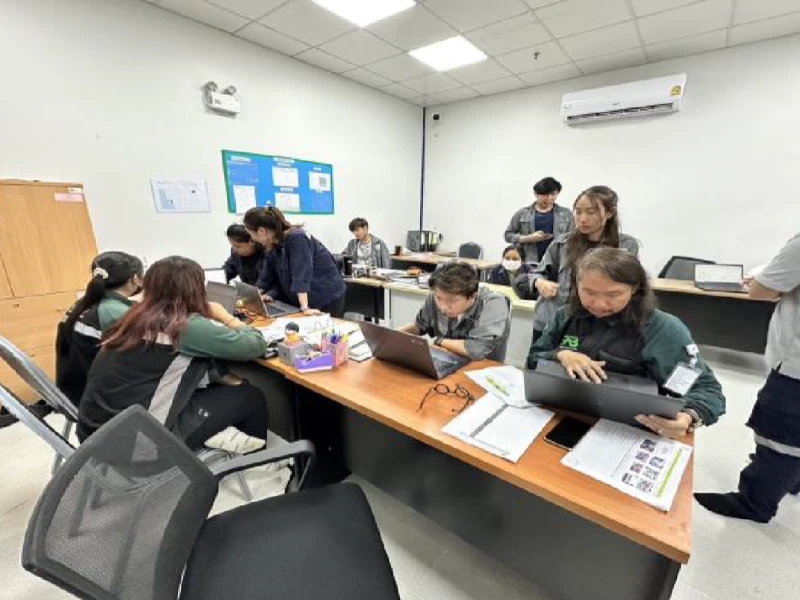
- Desk Assessment: Annual assessments are conducted through self-assessment questionnaires, with systematic evidence review by the Group’s procurement team.
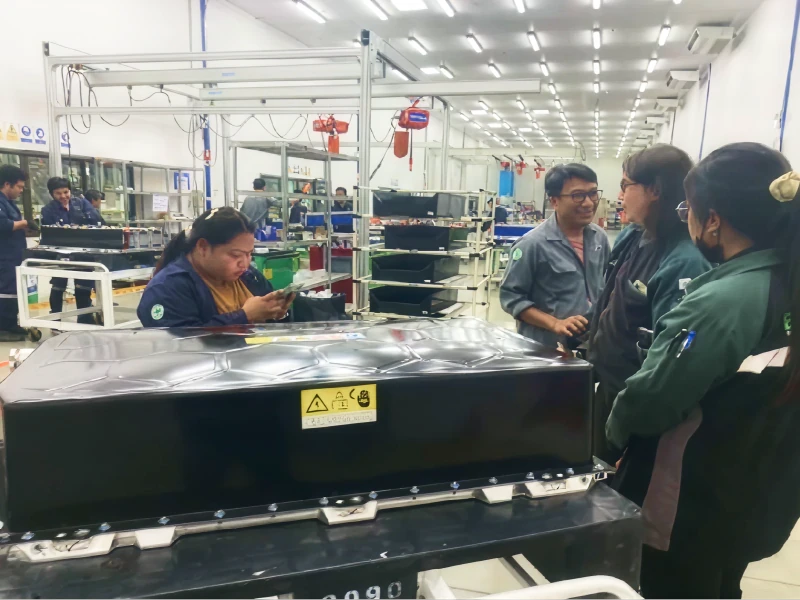
- On-site Assessment: Physical inspections are conducted at supplier premises by the Group's own personnel (2nd party assessment) or in conjunction with specialist assessors, to evaluate actual working conditions and environmental management. The SMETA standard is applied as the reference framework for assessment criteria, with other internationally recognized certifications such as ISO 14001, ISO 45001, and ISCC.
- Corrective Action Plan (CAP): Where assessment results fall below the required threshold, the Group collaborates with the relevant supplier to develop a Corrective Action Plan (CAP), with monthly or quarterly follow-up monitoring and support provided, both remotely and through on-site assistance, to help suppliers elevate their performance to meet the Group's expectations.
Capacity Building and Strategic Collaboration
The Group is committed to enhancing the capabilities of both internal personnel and business partners, building a resilient and sustainable supply chain ecosystem as follows:
- Training and Awareness BuildingOnline Supplier Training Sessions are provided, particularly for significant suppliers, covering the Group's ESG program, the Supplier Code of Conduct, and the Anti-Corruption Policy, to ensure suppliers understand the Group's standards and expectations and to share best practices.
- Continuous Improvement SupportFor suppliers that have not yet met the required threshold, the Group provides a Capacity Building Program and advisory support in developing corrective plans until the supplier achieves the required performance standard.
- Equitable Selection CriteriaThe Group awards additional scoring credits to suppliers with outstanding ESG performance in the selection and contract awarding process.
- ESG Role TrainingDepartment Training is provided to a procurement team regularly and internal stakeholders to communicate the latest policies and practices, including their responsibilities in reviewing and screening suppliers against ESG criteria.
- Professional Skills DevelopmentFocused on broadening knowledge in sustainable procurement and risk management, enabling employees to professionally analyze and address complex supply chain challenges.
- Proactive Risk AssessmentImplement ESG risk self-assessment tools and pre-risk assessment tool during new supplier registration to identify high-risk groups.
- Monitoring and Corrective ActionAnnual on-site inspections are conducted for high-risk suppliers. Where violations of the Code of Conduct or ESG requirements are identified, the Group initiates immediate investigation and collaborates with the supplier to develop a corrective action plan. In cases of serious violations, the Group reserves the right to terminate the business relationship to uphold the governance standards.
- International Standards CollaborationParticipation in programs and frameworks, including the UN Global Compact, alongside the adoption of the International Sustainability and Carbon Certification (ISCC) standard.
- Joint Environmental ProgramsCoordinating with suppliers on decarbonization and Resource Efficiency initiatives to collectively advance Net Zero targets and build Climate Resilience throughout the value chain.