



Occupational Health and Safety



Management Approach
Quality, Environmental, Occupational Health and Safety Policy
The Group has announced its Quality, Environment, Occupational Health and Safety Policy, with a commitment to reducing risks and losses to lives and assets, while providing a safe and hygienic working environment for employees, contractors, and stakeholders. The ultimate goal is to become a Zero Accident organization. The policy emphasizes continuous improvement in the safety management system, with both qualitative and quantitative targets established. It also includes commitments to control, prevent, and reduce occupational health risks, and to promote the health of employees, communities, and stakeholders.
Governance Structure and Roles and Responsibilities
The Group manages occupational health and safety within the framework of ISO 45001:2018, the international Occupational Health and Safety Management System standard, and applies Process Safety Management (PSM) principles to control risks within complex production processes, preventing abnormal events that could impact personnel, assets, and the environment.
OHS Management Processes and Measures
Hazard Identification and Risk Assessment Process
The Group has established a systematic Hazard Identification and Risk Assessment process to identify Risks and Opportunities across all operational processes, activities, and work areas, and to determine appropriate prevention and hazard control measures. The process focuses on the elimination of workplace risks and hazards, and the identification of safety or health risk issues across all principal activities. This covers both employee and contractor activities, with close monitoring of contractors' occupational health and safety performance. Preparedness measures are also in place to handle various emergency situations, such as inspection of alarm systems, fire escape routes, emergency lighting, automatic fire suppression systems, and various emergency response equipment. Emergency response teams are regularly trained to ensure constant operational readiness.
Incident Management and Investigation Process
The Group maintains a systematic process for managing workplace accidents, injuries, illnesses, and occupational diseases, fully integrated with the ISO 45001:2018 standard to ensure comprehensive coverage from prevention through to continuous improvement.
Incident Management Stages:
- Identification: All employees or witnesses must immediately identify and report all incidents (including Near Misses and Hazards).
- Recording: Records of accidents, illnesses, and occupational diseases are maintained.
Timeliness of reporting to prevent recurrence
Root Cause Analysis (RCA) is conducted to identify underlying causes, contributing factors, and system control deficiencies.
Identification of root causes to ensure targeted corrective actions
Clear Corrective and Preventive Actions (CAPAs) are defined with designated responsible parties.
Application of the Mitigation Hierarchy in corrective action implementation
Effectiveness of corrective actions is monitored and verified to confirm that measures genuinely prevent recurrence.
Continuous Improvement
Records are maintained and reported to senior management on a regular basis, and submitted to regulatory authorities as required by law.
Regulatory Compliance and Transparency
Serious Incident and Fatality Management
In the event of serious incidents resulting in severe injury or fatality, the Group applies an elevated standard of management with enhanced rigor and transparency, as follows:
- (1) Immediately report to senior management and the Risk Management Committee; (2) Coordinate with emergency services and relevant legal authorities; (3) Secure the incident scene to preserve evidence for investigation.
Operations Manager and HSE department
Establish a Serious Incident Investigation Committee (comprising senior management, OHS specialists, and OSHEC representatives) to conduct an independent and comprehensive investigation, covering both employees and contractors.
Serious Incident Investigation Committee
Conduct Root Cause Analysis (RCA) using in-depth tools such as the Fishbone Diagram; define corrective measures in accordance with the Mitigation Hierarchy to permanently eliminate or reduce risk.
HSE department and Risk Management Committee
Provide prompt and equitable support and compensation to the family of the deceased in accordance with applicable law and company welfare provisions.
Human Resources and Legal department
Investigation findings and corrective actions are reviewed and approved by the Risk Management Committee and the Board of Directors to ensure the highest level of governance oversight.
Board of Directors and Risk Management Committee
For further information, please refer to
Quality, Environmental, and Occupational Health and Safety Policy
Performance
Disclosure of Safety Performance Metrics, including Lost Time Injury Frequency Rate (LTIFR) and Work-related Fatalities for both employees and contractors, is as follows:




Case Study/Success Stories

OHS Digital Technology Integration:
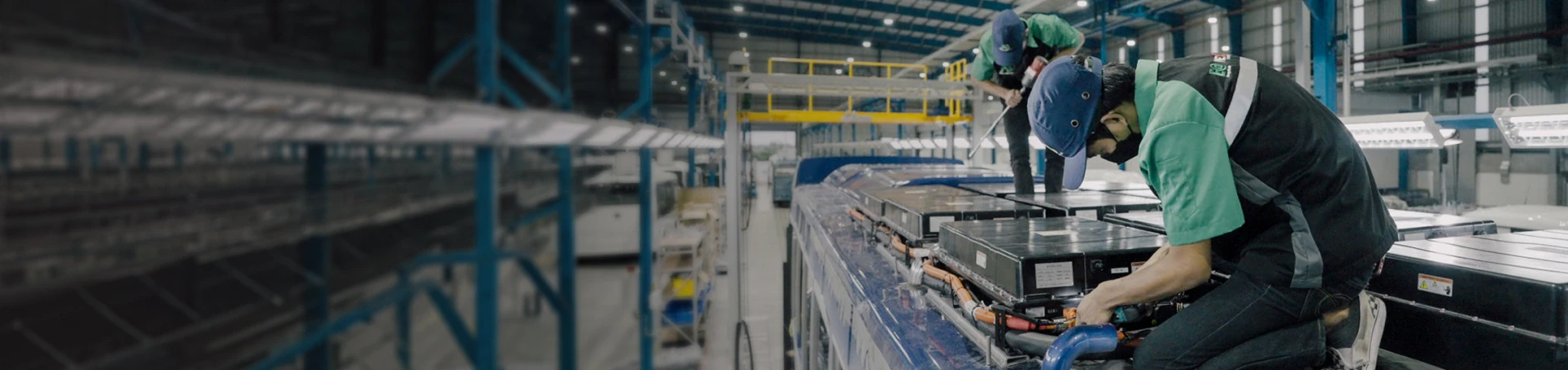
The Group is advancing the use of dedicated platforms as the primary infrastructure for safety management support, delivering a systematic and high-efficiency management system with Visualization and Analytics capabilities for Proactive Monitoring and safety risk reduction.

Safety Culture Building:
Ongoing safety awareness activities are conducted, including Safety Talk communications, Safety Mind campaigns, and Safety Patrol initiatives, to promote safety awareness across the entire Group.

Proactive Health Promotion:
Occupational health risk assessments conducted by occupational medicine physicians, combined with participation in government-supported programs such as the "Disease-Free, Safe and Healthy Workplace" initiative, contribute to the comprehensive elevation of employee health and safety standards across all dimensions.
Human Capital Management (HCM)


Management Approach
Employee Management Policy
The Group manages human resources in accordance with corporate governance principles and internationally recognized human rights standards. Its commitment to fair employment encompasses living wage remuneration aligned with the actual cost of living, reasonable working hours, and the respect for collective bargaining rights in support of employee well-being. The Group further upholds a Diversity, Equity and Inclusion (DEI) policy free from discrimination based on gender, ethnicity, religion, or any other characteristic, complemented by a workplace anti-harassment policy and confidential grievance channels.
The Group communicates policies, regulations, and guidelines relating to labor standards are communicated effectively to all levels of the workforce (communicated globally), embedded in new employee orientation curricula, and disseminated through the corporate Intranet and internal digital communication platforms. In addition, to promote mutual understanding and respect for diversity, the Business Code of Conduct has been made available in bilingual format (Thai and English), ensuring that all employees can access and fully comprehend its contents.
Governance Structure and Roles and Responsibilities
The Group has established a systematic employee management governance structure, with clearly defined roles and responsibilities from the Board of Directors through to the operational level, to ensure that human resources management is aligned with business direction and good corporate governance principles, as follows:
- Highest-Level Oversight: Define the vision, strategy, and core policy framework for human resources management; oversee employee-related impacts and risks to ensure sustainable organizational growth.
- Nomination and Review: Recommend criteria for executive-level recruitment; evaluate the appropriateness of fair compensation structures in alignment with performance outcomes.
- Advisory Role: Provide policy and strategy recommendations; monitor action plans to ensure timely execution and achievement of defined objectives.
- Strategic Operations: Primary responsibility for translating policy into practice, encompassing recruitment, management, learning and development, employee well-being and engagement, and continuous organization development.
Human Resources Management Processes and Measures
Strategic Human Capital Management
The Group firmly believes that having the right people is the key to driving future energy innovation. Accordingly, the Group places strong emphasis on managing the Employee Lifecycle, from proactive recruitment through to the retention of high-potential talent, as follows:
- Job Fair: University roadshows and participation in job fairs (both onsite and online) to attract Gen Z and fresh graduates, as part of youth employment Initiatives targeting young people with an interest in clean energy technology.
- Cultural Fit Assessment: Integration of organizational culture assessment into the selection process to ensure new employees can adapt and co-drive innovation within the Group from the outset.
- Standardization of Recruitment Practices: Recruitment standards are reinforced through the enhancement of hiring manager capabilities and the creation of structured interview guides that enable context-specific competency assessment.
- Integrative Learning: Cooperative education and work-integrated learning models are prioritized, with designated mentors responsible for transferring specialized skills and collaborative work practices.
- Knowledge Transfer: Retired technical specialists are invited to return in advisory or instructional roles, transferring advanced knowledge and expertise to the next generation of employees.
Human Resources Management
Fair Compensation and Living Wage
The Group is committed to providing comprehensive and equitable compensation and benefits to promote the well-being and financial security of all employees across every level, structured across the following principal categories:
- Group Insurance: Employees receive healthcare coverage through the Group's corporate insurance scheme. Optional group insurance is also available to extend protection to employees' families, alleviating
- Preventive Health Surveillance: Annual risk-based health examinations are provided to all employees, complemented by access to vaccinations at preferential rates to promote workplace health and immunity. Employees' immediate families — including spouses and children (including adopted children), are eligible for equivalent healthcare coverage under the same premium rates and benefit terms as the employee.
- Provident Fund: Long-term retirement savings are facilitated through the Group's Provident Fund. Employee contributions are matched by employer contributions in accordance with the Group's prescribed terms, with employees permitted to adjust their contribution rate once annually in alignment with their personal financial planning.
- Performance-Based Rewards: Annual performance bonuses are determined with reference to the Group's financial capacity and overall business performance, assessed alongside individual performance evaluation outcomes, to recognize dedication and incentivize high achievement.
- Long-Term Employee Incentives: The Group fosters sustained employee commitment and shared organizational growth through the "Trust Fund" program, a long-term incentive scheme delivered in the form of stock-based or partnership participation. The program is designed to provide financial security upon retirement and is open to all employees from operational to sub-senior management levels. Eligible employees are selected based on sustained Grade A performance for two or more consecutive years, recognition as high-potential talent generating significant added value for the Company, and exemplary embodiment of the E@ DNA organizational identity. Benefits are distributed over an average long-term period of more than 3 years to genuinely reinforce long-term value creation and organizational sustainability. Eligible employees additionally receive above-standard benefits, including up to 25 days of annual leave per year and health insurance coverage for actual medical expenses up to THB 2,000,000 per annum.
- Off-Site Assignments: The Group provides expense support for both domestic and international business travel, including a daily allowance for off-site operational expenses, and vehicle and travel reimbursement on an actual cost basis where the use of a personal vehicle has been approved.
- Other Allowances: Hardship allowances, cost-of-living supplements, and travel support are provided as appropriate to the working conditions of each operational area.
Supporting a Living Wage
The Group's remuneration management policy adheres strictly to statutory standards, with compensation determined by knowledge, capability, and performance, free from discrimination based on gender, ethnicity, or religion. The following proactive policies and measures govern the Group's wage management practices:
Elevating Workforce Capability Toward a Sustainable Innovation Organization
The Group is committed to the simultaneous development of its people and organization under the "Learn, Lead, Grow Together" philosophy, in preparation for its evolution into a leading clean energy innovation organization. The details of implementation in accordance with internationally recognized frameworks are as follows:
- 70% Experience-based Learning: Emphasis on on-the-job training and proactive initiatives such as "EA Inside EA," which empowers employees to propose innovative ideas and address real operational challenges.
- 20% Social Learning (Coaching, Mentorship & Networks):
- Coaching and Mentorship: Senior executives are required to conduct structured 2-way feedback sessions with high-potential Talent and leadership development program participants, with the aim of transferring professional experience and strategic thinking.
- Teams and NetworksPeer learning through internal networks is actively encouraged, including ISO Management Review meetings and safety network groups, to facilitate the cross-functional exchange of best practices across business units.
- 10% Formal Education Onsite Workshops and the @CORE e-Learning platform, enabling employees to access learning resources anytime and anywhere.
The Group is further committed to fostering a continuous learning culture in pursuit of HR management excellence (Capacity Building for Labor Excellence), supporting executives and employees in participating in specialist seminars and workshops with leading industry organizations. Topics covered include foundational training on GHG accounting and reporting under ISO 14064-1 and ISO 14067, to exchange and integrate international sustainability best practices.
Labor governance capabilities are further strengthened through Knowledge Transfer from external Subject Matter Experts on key labor standards and regulatory requirements. This Proactive Learning approach not only elevates individual employee capability in accordance with Individual development plans (IDPs) but also reinforces the Group's tangible commitment to conducting business in full alignment with international human rights standards and ethical principles.
- Permanent employees at all levels from Officer through to C-Level.
- Contractual and part-time employees with particular coverage under Mandatory Courses in Safety, ISO systems, and Compliance — to uphold consistent operational and safety standards across the entire organization. This is delivered through the following principal approaches:
Training and Development
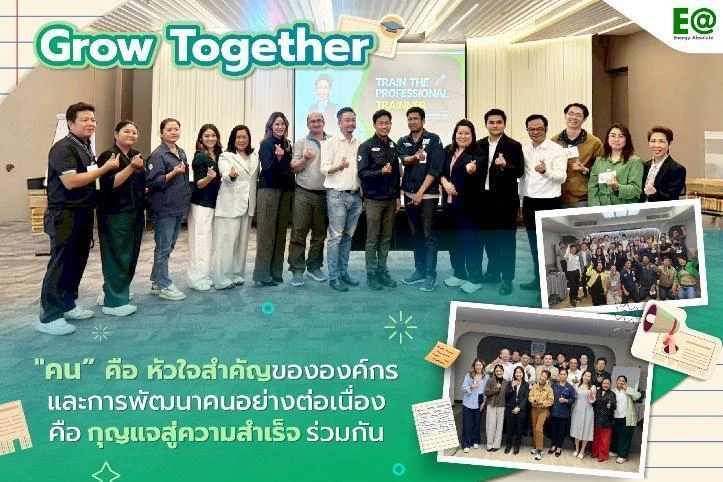
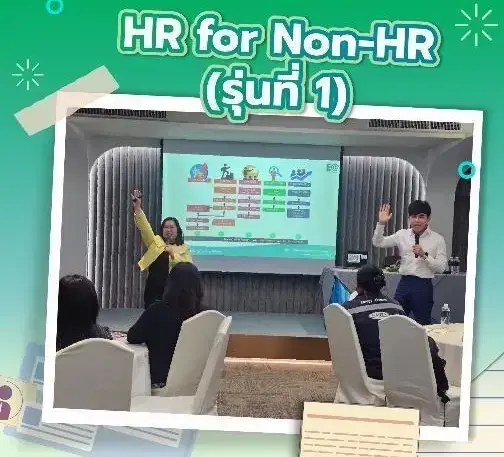
Training programs are designed in accordance with organizational Training Needs Surveys, addressing knowledge, skills, and functional competencies in each business line. e-Learning delivery through the @CORE platform enables employees to access learning resources anytime and anywhere, complemented by Onsite Workshops for hands-on practice and online delivery for employees in regional locations.
Training for Sustainable and Climate Transition
The Group's learning strategy goes beyond conventional skills development, prioritizing Reskilling and Upskilling to prepare the workforce for the low-carbon economy under the principles of Just Transition. This ensures that all employees are equipped to adapt and grow alongside technological change and the evolving direction of green business, as follows:
The knowledge and skills gained through the above capability development initiatives are channeled into real-world innovation through the "EA Inside EA" program, an initiative that empowers employees to translate their clean energy expertise into tangible solutions, driving the organization toward sustainability in a concrete and measurable manner. Support functions are equally encouraged to contribute ideas for process improvement, operational streamlining, and the adoption of new technologies to enhance internal efficiency, further strengthening the core operations of the organization.
Future Readiness and Career Transition Planning
The Group's qualification program enables employees to chart their own career advancement pathways through Individual Development Plans (IDPs), cultivating self-development motivation, strengthening organizational commitment, and preparing employees for critical future roles.
Manager Learning Program (MLP)
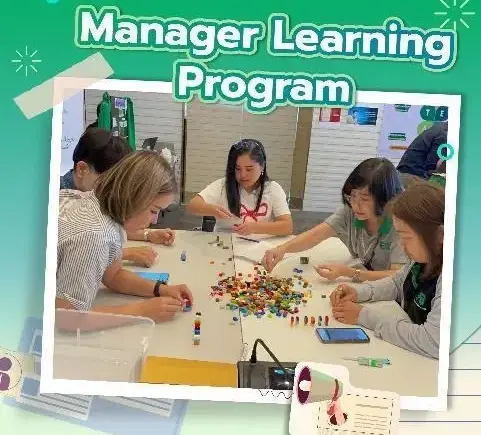
The Manager Learning Program (MLP) is designed to develop mid-level leaders with a strong understanding of organizational identity, instilling awareness of their managerial role, team leadership, team-building for growth, and value creation for future organizational advancement, delivered through project-based learning and executive coach.
Leadership Development
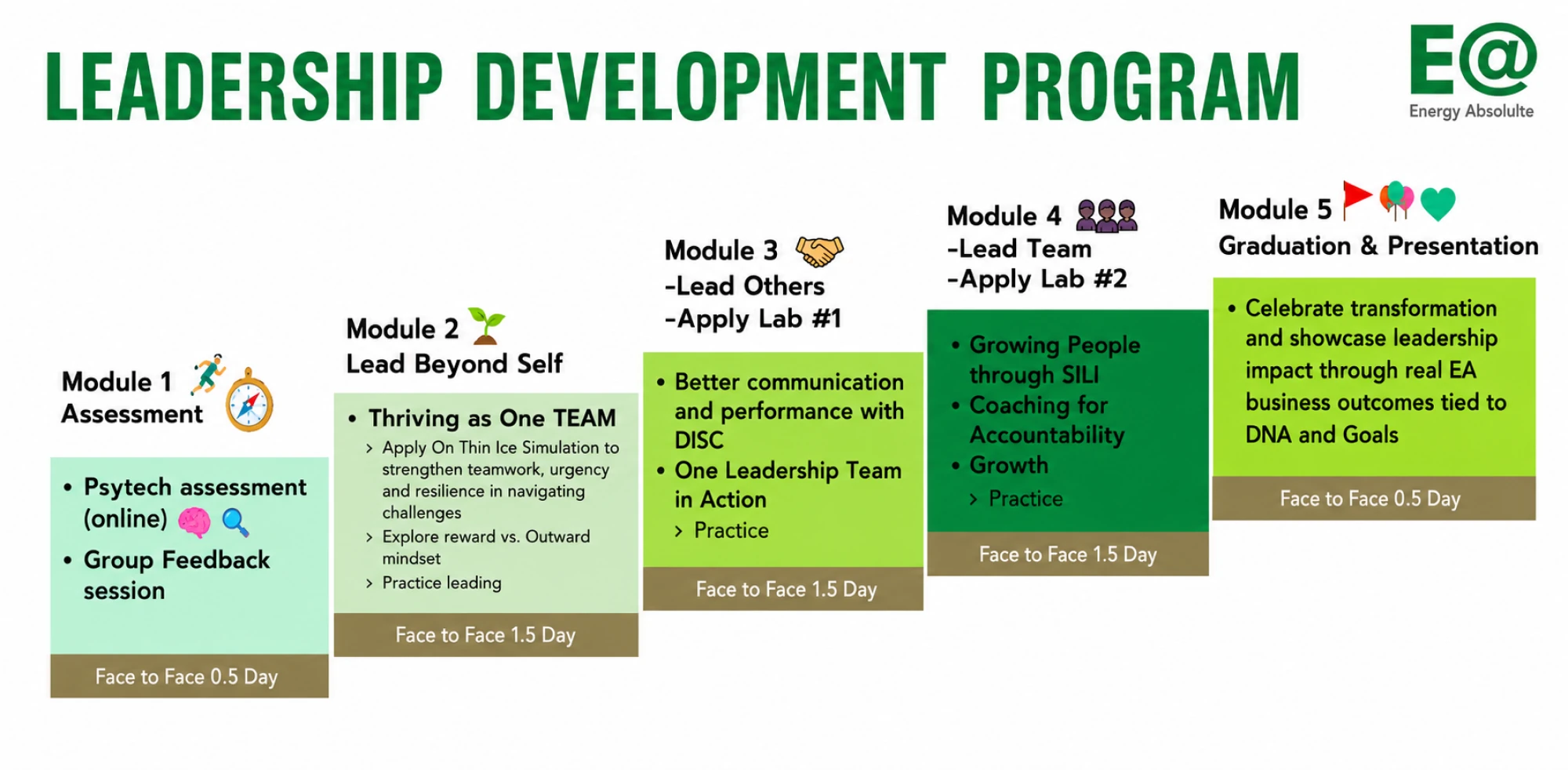
The Leadership Development Program cultivates leaders capable of driving the organization into the future, with emphasis on project-based learning and executive coaching to develop the mindset and people management skills required for the modern era.
Talent Management
The Group focuses on identifying, selecting, and developing an internal Talent Pool in preparation for critical future roles through Succession Planning. Potential Assessment processes are used in conjunction with Individual development plans (IDPs) to retain and advance the capabilities of high-potential employees.
Learning Culture and Self-Learning
A Self-Learning culture and Continuous Learning ethos are cultivated through internal communications and activities, including knowledge articles, short-form video content, experience sharing, and engagement incentives such as lucky draws upon course completion, to sustain positive learning motivation across the entire organization.
Cultural Education: Embedding the E@ DNA Culture through EA Inside EA
The Group places sustained emphasis on cultivating internal innovation through the "EA Inside EA" initiative, which invites employees at all levels to propose ideas, projects, or process improvements that generate positive outcomes for the organization, society, and sustainability performance. The initiative focuses on digital and innovation transition, developing skills essential in the digital transformation era, including AI for Work and AI automation, with innovation projects designed to solve problems and enhance efficiency, enabling smarter, faster and transparent operations.
A recognition and rewards system is embedded within the initiative, and outstanding innovations are presented at executive forums to facilitate organizational-scale implementation. EA Inside EA is a key mechanism in advancing the Group's vision of becoming a sustainable clean energy innovation organization, empowering employees as "innovation owners" and co-creators of shared organizational outcomes, driving the organization toward growth, resilience, and performance across all dimensions of ESG.
Performance Management System - PMS
The Group is committed to building a performance-driven culture, with quarterly performance reviews (quarterly review) mandated for all employees at every level to promote organizational agility and operational flexibility. A critical component of this approach is the development of appraisal skills, 2-way feedback and coaching capabilities, and employee development competencies among all managers. The system further ensures that all employees have equal opportunity to improve their performance outcomes in a timely manner, through the following key components:
Organization Development
Strategic workforce planning and internal mobility to ensure organizational agility and readiness for digital-era challenges and an intensifying competitive landscape, the Group has implemented the following:
Employee Support & Well-being Programs
The Group is committed to creating an environment that promotes well-being and supports work-life balance, as follows:
- Working Hours Management: overtime is minimized through job analysis and real-time digital monitoring of overtime hours. Working hours limitation policies extend to outsourced, subcontracted workers, and suppliers to safeguard the well-being of all workers engaged by the Group.
- Flexible Working Arrangements: Hybrid working policies are available for eligible departments and roles, supported by flexible working hours to reduce commuting stress and promote work-life balance.
- Annual Leave Utilization: The Group proactively monitors and encourages full utilization of annual leave entitlements to ensure adequate rest for all employees.
- Monitoring and Flagging System: Digital attendance recording and HR management systems are used for real-time overtime monitoring, with a focus on transparent and legally accurate overtime compensation calculations for all employees. When departments are identified as having excessive overtime statistics, the Human Resources function collaborates with the relevant department to review workforce planning and improve operational processes to sustainably restore overtime levels to within acceptable norms.
- Maternity and Childcare Support: Female employees are entitled to 120 days of maternity leave (primary caregiver), and male employees are entitled to 15 days of paternity leave (non-primary caregiver). A dedicated breastfeeding room is
- Paid Family Care Leave: also provided on premises. Employees may take paid family care leave to care for a child, spouse, parent, or family member who is ill or in need of special care, an additional entitlement provided to support family well-being and stability.
- Workplace Stress Management: Stress management is promoted through thoughtful workplace environment design and open feedback channels to reduce work-related pressure.
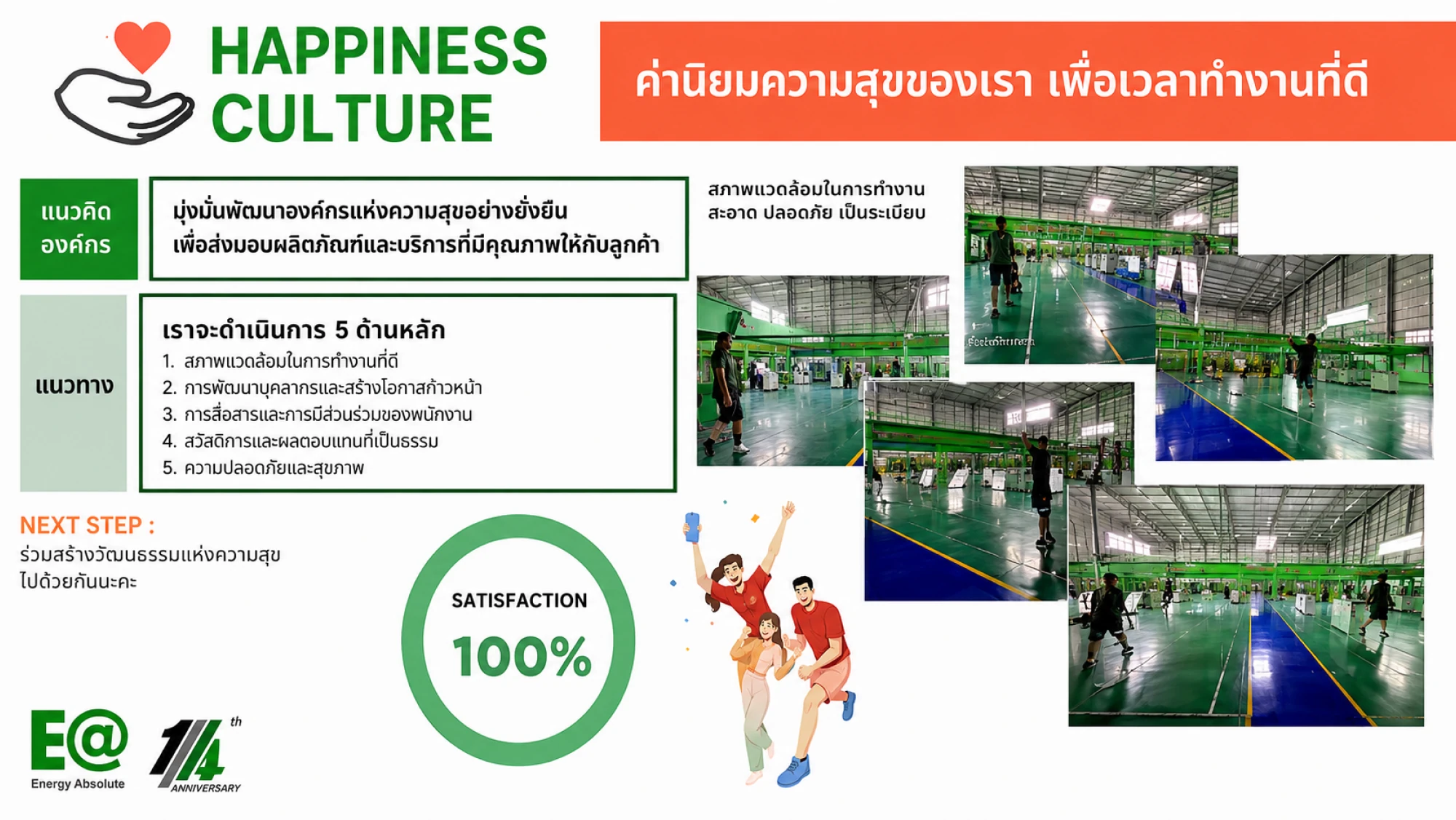
- Sport & Health Initiatives: Regular health and wellness activities are organized, including EA Sports Day and support for employee sports clubs, to encourage physical activity and strengthen organizational relationships.
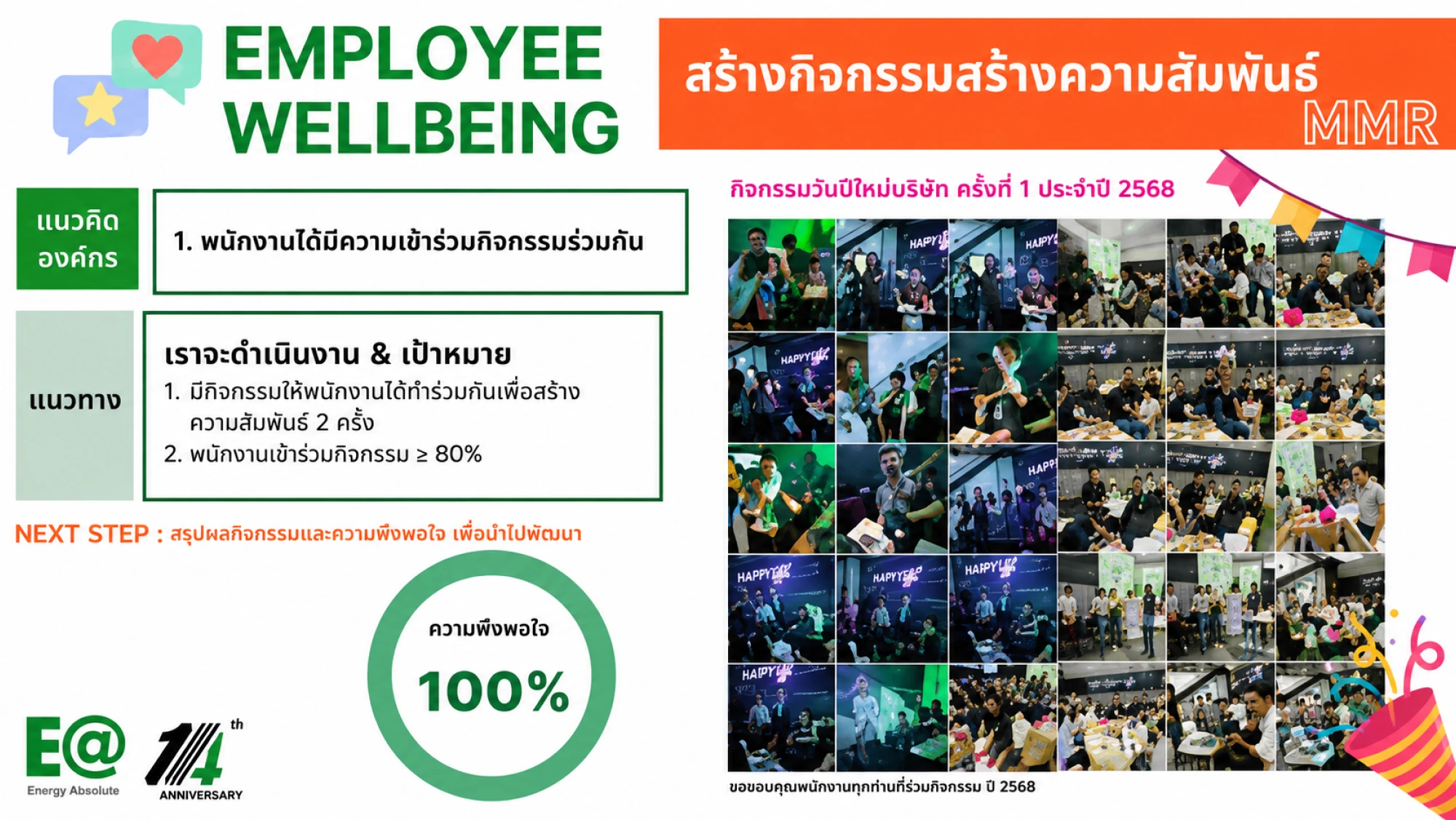
- Engagement Activities: Positive energy is fostered through festive activities including Songkran and Christmas celebrations, as well as manager-employee bonding events such as Happy Lunch Together and executive dinner.
Employee Leave Benefits
The Group promotes work-life balance through a comprehensive leave policy covering all life stages. Annual leave is provided with a proactive tracking and encouragement system to ensure full utilization each year in support of employee well-being. Six days of paid personal leave to address urgent needs or provide family care. Female employees are entitled to maternity leave of up to 120 days; male employees are entitled to 15 days of paternity leave. Additional entitlements include sick leave (actual days required), sterilization leave, 3 days of marriage leave, 3 days of bereavement leave (with financial assistance from the Company), 30 days of leave for ordination or Hajj pilgrimage, and statutory entitlements including military service leave and vocational training leave — all with continued salary payments as prescribed.
Transition & Senior Expert Program
The Group recognizes the critical importance of managing employees through career Transition periods to preserve Organizational Wisdom and provide financial and life security for those approaching the end of their employment or retirement, through the following approaches:
Employee Engagement Program
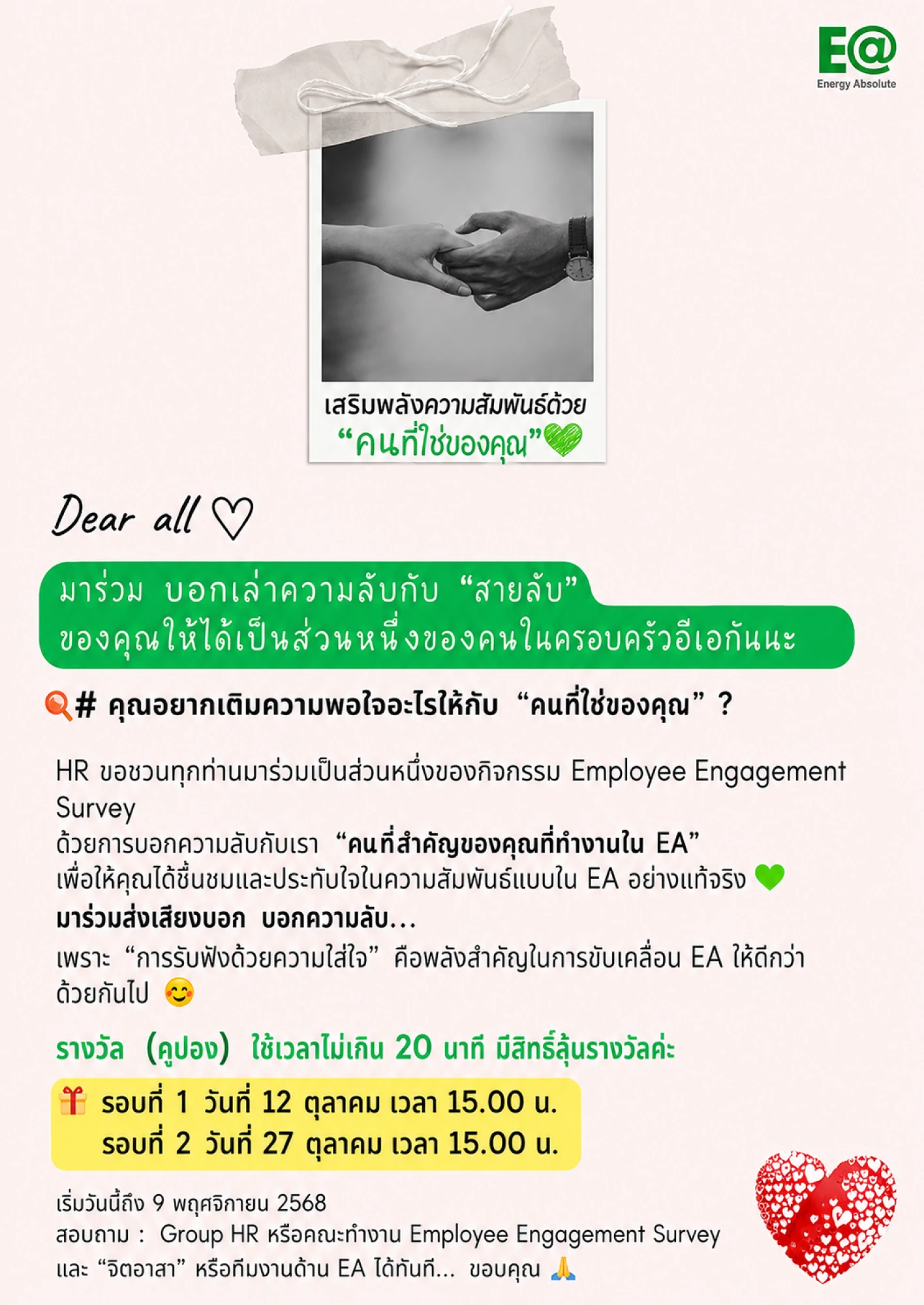
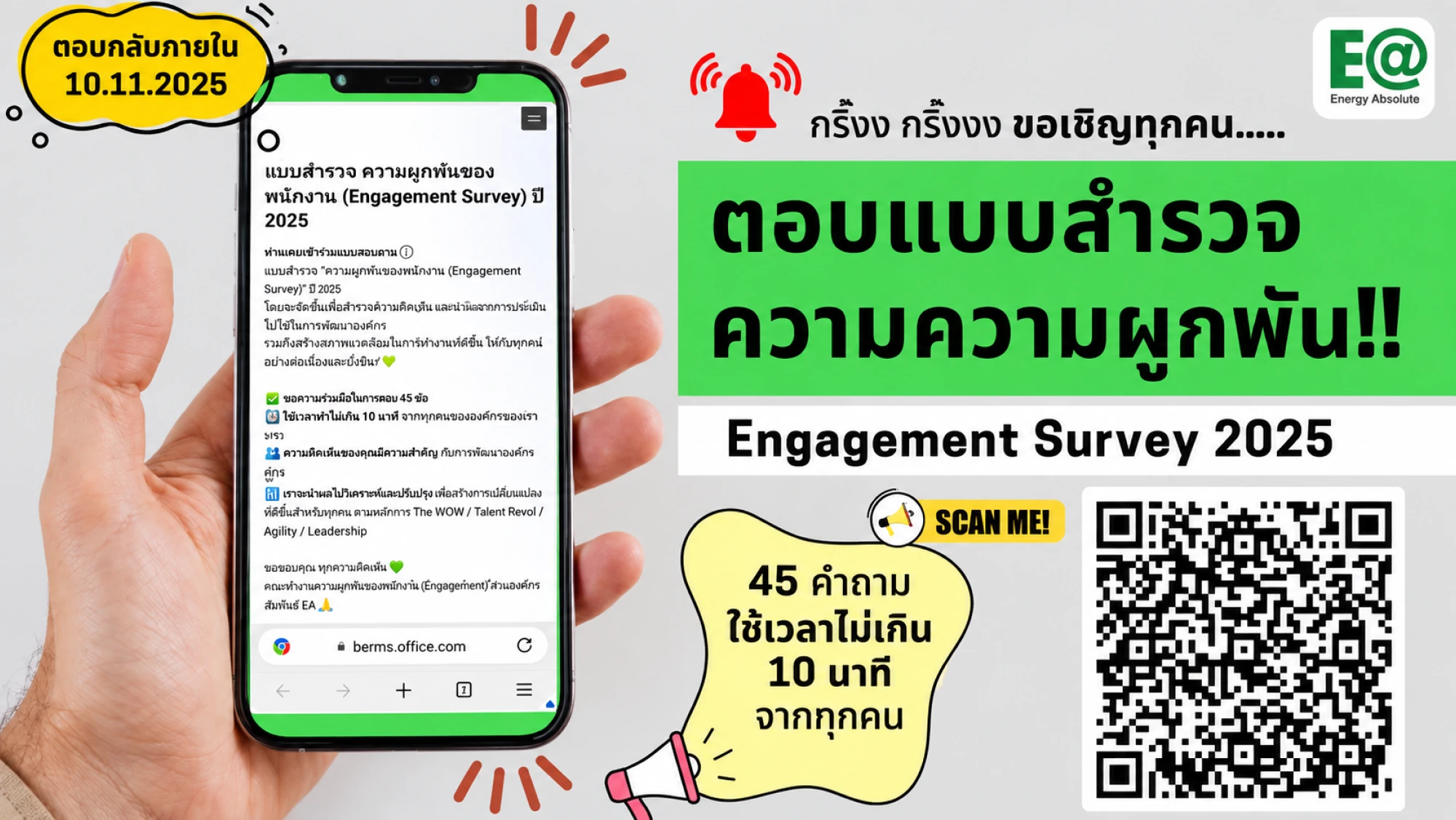
The Group firmly believes that employee engagement is a critical organizational driver. The Group is committed to creating an environment where employees feel valued, motivated, and empowered to grow alongside the organization's sustainability journey, under the "One EA – Grow Together" ethos. In 2025, the Group elevated its assessment process through the "Boost Employee Engagement" comprehensive engagement survey, enabling proactive, department-level performance improvement. To ensure measurement comprehensively reflects employee motivation and well-being, the Group has integrated four key dimensions into the employee survey:
CEO Town Hall: Regular direct communication sessions from the Chief Executive Officer to employees at all levels are held to convey the Group's vision and strategic direction, while providing an open dialogue forum for employees to raise questions and contribute ideas directly, fostering shared understanding and deepening organizational commitment under the E@ DNA organizational identity.
Promotion of Labor Rights and Employee Participation
The Group is committed to respecting labor rights and freedom of association in accordance with international labor standards, and supports effective employee representation mechanisms to ensure fair consultation and collective bargaining processes, as follows:
Case Study/Success Stories

Organizational Structure Enhancement with the Caliber Alliance Team (CAT)
The Group has elevated the organizational structure to create a management model centered on agility and the capacity for a quick and smooth comeback. The cornerstone of this strategy is the establishment of the Caliber Alliance Team (CAT), an agile team tasked with driving the CEO's and the organization's key strategic initiatives. The CAT unit plays a pivotal role in translating CEO directives into clear targets and KPIs, tracking and driving project delivery, and proposing strategic solutions through structured ideation and analysis. The CAT also serves as a coordination hub for accurate and transparent information dissemination and systematic task tracking. Its scope of responsibility spans key domains including energy innovation and technology, finance and investment, digital solutions, and HR Capital transformation. This structure is designed to generate organizational synergy and provide a robust foundation for driving the Group sustainably into the future.

Performance Modernization
The Group is building a performance-driven culture through the modernization of its Performance Management System (PMS) from annual to quarterly review cycles, to enhance agility in response to a rapidly evolving business environment. Organizational goals are cascaded to individuals through OKR and PDA, with 360-degree feedback and E@ DNA behavioral competency assessments ensuring comprehensive evaluation accuracy. Agile conversations and dynamic goal setting throughout the year complement this reform, working in tandem with precise workforce planning to sustain competitive capability and enduring employee motivation.

Cultivating Future Leaders and an Innovation Culture
This case study highlights the Group's Human Development Structure as a key achievement, particularly the development of crisis-ready role-model leaders through the Leadership Development Program (LDP) and MLP, alongside a robust E@ DNA organizational culture and the application of AI automation for precision-based skill matching in recruitment. Collectively, these elements constitute a solid foundation for the Group's sustainable long-term growth.

Care in Crisis: Employee Flood Relief Measures in Southern Thailand
Recognizing the hardship experienced by employees and their families as a result of the 2025 flash flooding in Southern Thailand, the Group took proactive and concrete relief action in support of its people during the crisis:
- Initial Relief Payments: Emergency assistance funds of over THB 110,000 were distributed to support immediate living needs.
- Housing Recovery Support: Actual-cost reimbursements of over THB 100,000 were provided to support the repair and restoration of employees' homes.
- Special Leave Entitlement: Five additional working days of special leave (not deducted from annual leave) were granted to allow employees time to manage and restore their homes to their pre-flood condition.


Human Rights

Management Approach
Human Rights Policy
To ensure that the Group's business operations are free from human rights violations, the Group has established a human rights policy and associated practices to prevent violations across all business activities. The Group upholds and respects human rights as set out in the Universal Declaration of Human Rights, together with relevant conventions and treaties on the treatment of labor, the UN Declaration on the Rights of Indigenous Peoples, the UN Global Compact, the UN Guiding Principles on Business and Human Rights, the Voluntary Principles on Security and Human Rights, and the International Labour Organization's Declaration on Fundamental Principles and Rights at Work (ILO Declaration). These commitments have been formalized through policy commitment and human rights commitment. The Group additionally places high priority on the employment of people with disabilities and elderly individuals, to support livelihood generation and access to dignified employment, and to advance human rights equality in a tangible manner.
Governance Structure and Roles and Responsibilities
The Board of Directors and the Corporate Governance and Sustainability Committee exercise the highest level of oversight, with resources and responsibilities for human rights management clearly allocated to relevant executives. Human rights management, integrated within the Group's broader sustainability management framework, is overseen by the Corporate Governance and Sustainability Committee, a sub-committee of the Board of Directors, which has been mandated to govern sustainability policy and management across the Group, including human rights management throughout the supply chain.
Define strategy, monitor program progress, review performance outcomes, and approve remediation measures in the event of identified impacts.
Drive human rights action plans and monitor alignment with actual operational practices.
Conduct risk assessments and implement preventive measures within their respective operational areas on a day-to-day basis.
Human Rights Management Processes and Measures
Application of Human Rights Due Diligence
The Group has adopted Human Rights Due Diligence (HRDD), aligned with the UN Guiding Principles on Business and Human Rights (UNGP) as the overarching framework for human rights management across all business activities in Thailand. Potential impacts are systematically identified and analyzed, and human rights risks are managed in a structured manner, ensuring the Group maintains effective controls and prevention mechanisms, as well as robust human rights support measures.
All executives and employees across every level of the Group's business operations are required to uphold and demonstrate commitment to the Group's human rights principles and to conduct business in full accordance with them.
The Group is resolute in its commitment to preventing human rights violations against all stakeholder groups, encompassing:
For further information, please refer to
Human Rights Due Diligence Guideline
Human Rights Due Diligence Process
- Own Operations: All operational sites of the Group are reviewed to prevent on-site human rights violations.
- Value Chain: Assessment is extended to Business Partners, Suppliers, and Contractors throughout the value chain.
- New Business Relations: Pre-investment risk assessments are conducted for new investment projects, mergers and acquisitions (M&A), and Joint Ventures.
- Identified Human Rights Issues: The Group prioritizes the identification and management of both actual and potential material human rights issues, including
- Forced Labor and Human Trafficking: Prevention of forced labor in all its forms.
- Child Labor: Rigorous monitoring and prevention measures are in place. The Group's commitment extends beyond the prohibition of child labor to the broader protection of children's rights.
- Freedom of Association and Collective Bargaining: The Group is committed to promoting and upholding employees' rights to organize and engage in collective bargaining within agreed frameworks. Policy communications and awareness-building are conducted at all levels to ensure employees can exercise their rights to contribute to and improve their working environment transparently and without discrimination.
- Discrimination: A Zero-Tolerance Policy is maintained against discrimination in all forms.
- Occupational Health and Safety: The working environment is maintained to the highest standards of safety and health for all personnel.
- Contact Channel: Submissions must be directed to chairman.audit.com @energyabsolute.co.th , under the oversight of the Audit Committee.
- Transparency Remediation Actions: The Group places utmost importance on the protection and remediation processes for individuals who may be adversely affected by the Group's operations, with an emphasis on maintaining accessible grievance channels in all circumstances, particularly during local emergencies and crises.
Key Labor Rights Measures and the Promotion of Diversity, Equity, and Inclusion
The Group adheres to rigorous practices to prevent labor rights violations and promote equality, underpinned by the following key measures:
Performance Data
Human Rights Risk Assessment Process
The Group conducts human rights risk assessments based on evaluation criteria encompassing Impact severity and Likelihood of occurrence, applied across operational sites and at the personnel level. The assessment encompasses rights holders and vulnerable groups, including women, children, ethnic groups, indigenous peoples, migrant workers, third-party contract workers, persons with disabilities, LGBTQI+ individuals, elderly persons, and pregnant women. This is conducted to screen for material issues and determine appropriate management approaches. The scope covers own operations, Tier 1 suppliers and contractors, and joint ventures.
Risk Issue Prioritization Criteria
The Group defines five risk impact levels: extreme, high, medium, low, and very low. Impacts assessed at medium through extreme levels are evaluated in conjunction with existing controls to provide a complete picture of enterprise-level human rights risks.
Human Rights Risk Assessment Results: Own operations (including joint ventures) and tier 1 suppliers/contractors
% of Total Assessed in the Last Three Years
100
% of Total Assessed Where Risks Have Been Identified
0
% of Risk with Mitigation Actions Taken
100
% of Total Assessed in the Last Three Years
100
% of Total Assessed Where Risks Have Been Identified
0
% of Risk with Mitigation Actions Taken
100
% of Total Assessed in the Last Three Years
100
% of Total Assessed Where Risks Have Been Identified
0
% of Risk with Mitigation Actions Taken
100
Society and Community
Management Approach
As a guideline for business process management (CSR-in-Process), EA group established a “Corporate Social Responsibility Policy” with the following seven principles.
For further information, please refer to
Corporate Social Responsibility Policy
Policy for Social Projects with Community Stakeholders
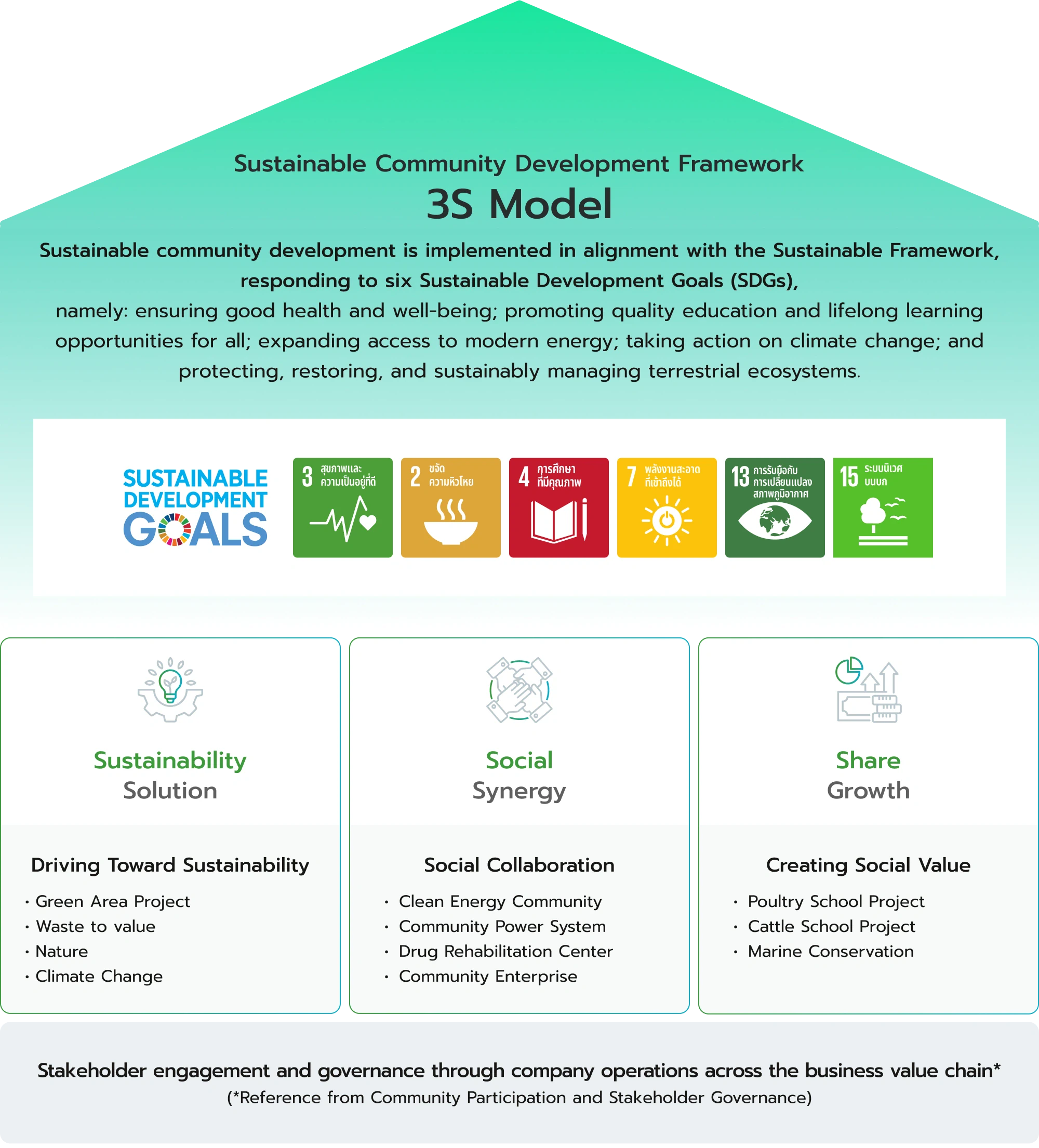
The Group has established the 3S Model as its strategic mechanism for sustainable community development, addressing 6 core SDG targets and emphasizing the integration of sustainability throughout the value chain.
The framework is structured around three pillars:
Collectively, these efforts aim to secure community well-being, educational opportunity, access to clean energy, and the sustainable protection of ecosystems.
Sustainable Community Development Strategy
The Group is committed to deploying the 3S Model to drive community sustainability in both the short and long term, with emphasis on economic empowerment and environmental awareness.
- Well-being and Economy: The Group targets holistic community development encompassing both well-being and economic dimensions, through project-community partnerships, beginning with needs assessments and the identification of opportunities to build upon existing community assets. Initiatives are designed to evolve into learning centers covering areas such as small business management, market access and sales channel development, and value-added agricultural product development.
- Environmental Awareness: The Group recognizes the urgency of current environmental challenges arising from climate change and aspires to serve as an advocate for the importance of these issues through its operational activities.
- Self-Reliance and Human Resources Development: The Group aspires for communities to achieve self-reliance through collaborative programs, placing human resources development at the center of genuine and lasting sustainable development. The Group is committed to human capital development through the systematic transfer of business management skills and knowledge to groups, organizations, associations, and individual households, enabling effective and independent enterprise management.
- Clean Energy Adoption: The Group aims to be an active role in promoting clean energy adoption within local communities by raising awareness of its benefits and encouraging its integration into daily life. This initiative seeks to reduce household-level pollution and support more sustainable living practices Core activities will focus on enhancing and building upon existing infrastructure and capabilities, taking into account the full spectrum of costs — financial, environmental, and human capital.
Sustainable Community Development Operational Approach
The Group focuses on creating values of social and community through social initiatives. It aimed at improving the quality of life and fostering promoting stakeholder engagement in sustainable development. The key operational approaches are as follows:
- Supporting skills and knowledge enhancement for community product development to create sustainable community economies, progressing from farmer groups to formally registered community enterprises. Strengthening community associations toward self-reliance, with potential to serve as model programs in the future.
- Tree planting both within and surrounding power plant project areas; conversion of organic waste into compost for soil improvement; enhancement of biodiversity within operational areas.
- Empowering communities surrounding power plants (solar and wind) to achieve self-reliance; promoting agricultural knowledge tailored to community needs to foster sustainable agriculture.
- Enhancing awareness and encouraging the integration of clean energy into everyday life through operational project activities (e.g., electric vehicles, EV charging stations), demonstrating technological potential and developing community livelihood opportunities related to clean energy.
Creating Shared Value Strategy
The Group's strategy centers on fostering sustainable livelihoods across economic, social, and environmental dimensions to build community strength and Resilience. This is pursued through the CSV approach alongside Corporate Social Innovation (C-SI). The strategy prioritizes the transfer of Skills for the Future and the co-creation of innovation integrated with local wisdom, in alignment with the Sustainable Development Goals (SDGs) and the Global Reporting Initiative (GRI) standards.
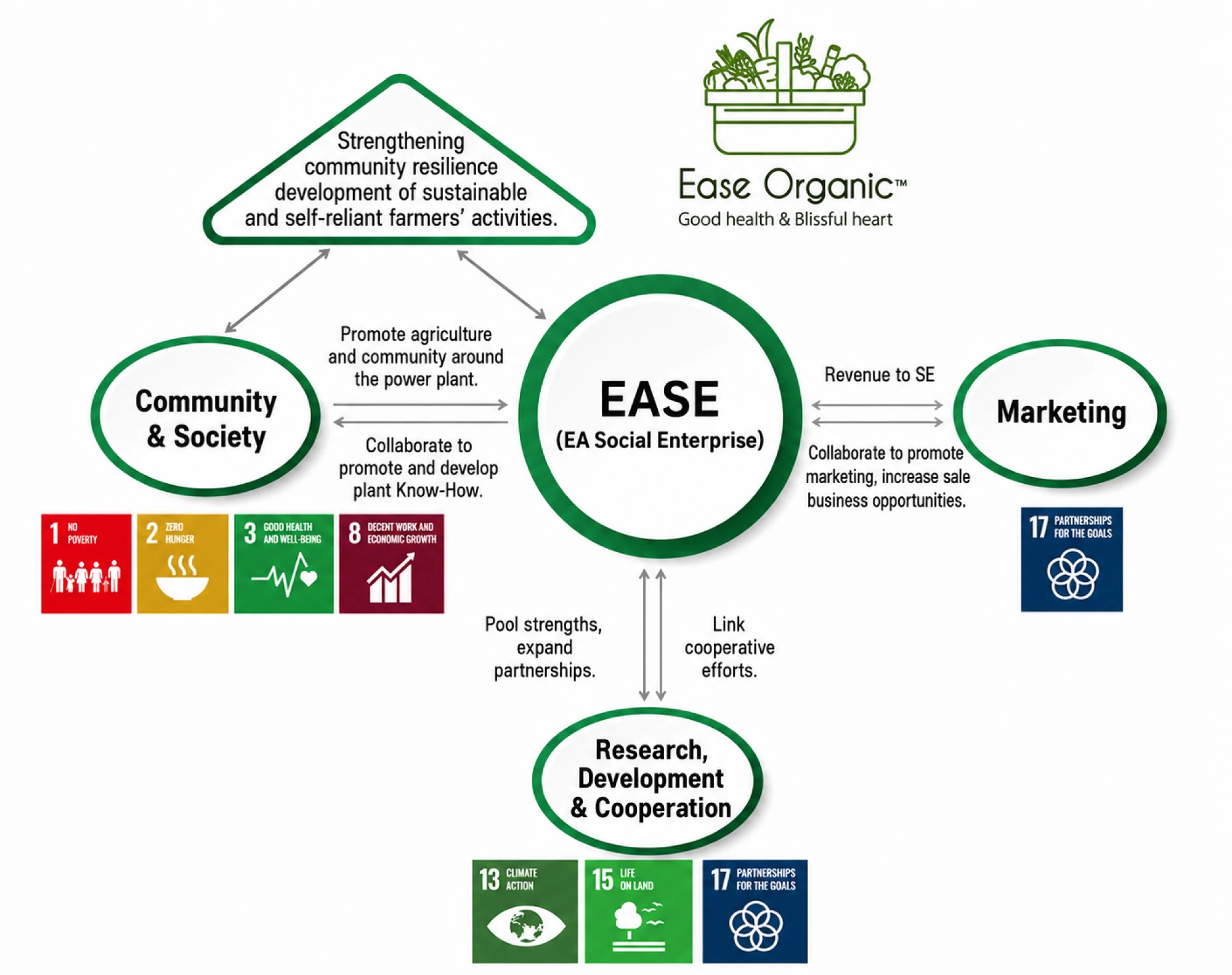
Creating Shared Value through Social Enterprise (EASE – EA Social Enterprise)
The Group has established a dedicated unit under the name EASE (EA Social Enterprise) to implement social enterprise initiatives that do not primarily focus on maximizing profit, but rather on creating sustainable social value through self-reliance. The initiative aims to enhance the quality of life of people, starting with communities surrounding the company’s power plants as pilot areas, while also promoting the creation of “decent jobs” within these communities. This enables local residents to access stable employment and regular income, leading to greater job security, improved livelihoods, and overall well-being, ultimately contributing to the sustainable development of the local economy.
The company implements social initiatives in collaboration with local farmers, community organizations, universities, business partners, and relevant networks to strengthen community resilience. These efforts aim to develop farmer-led enterprises that are sustainably self-reliant by promoting knowledge transfer, supporting production to enhance product quality, and facilitating fair market access to expand business opportunities. In addition, the company fosters collaboration in research, development, and scalability to ensure continuous and sustainable growth.
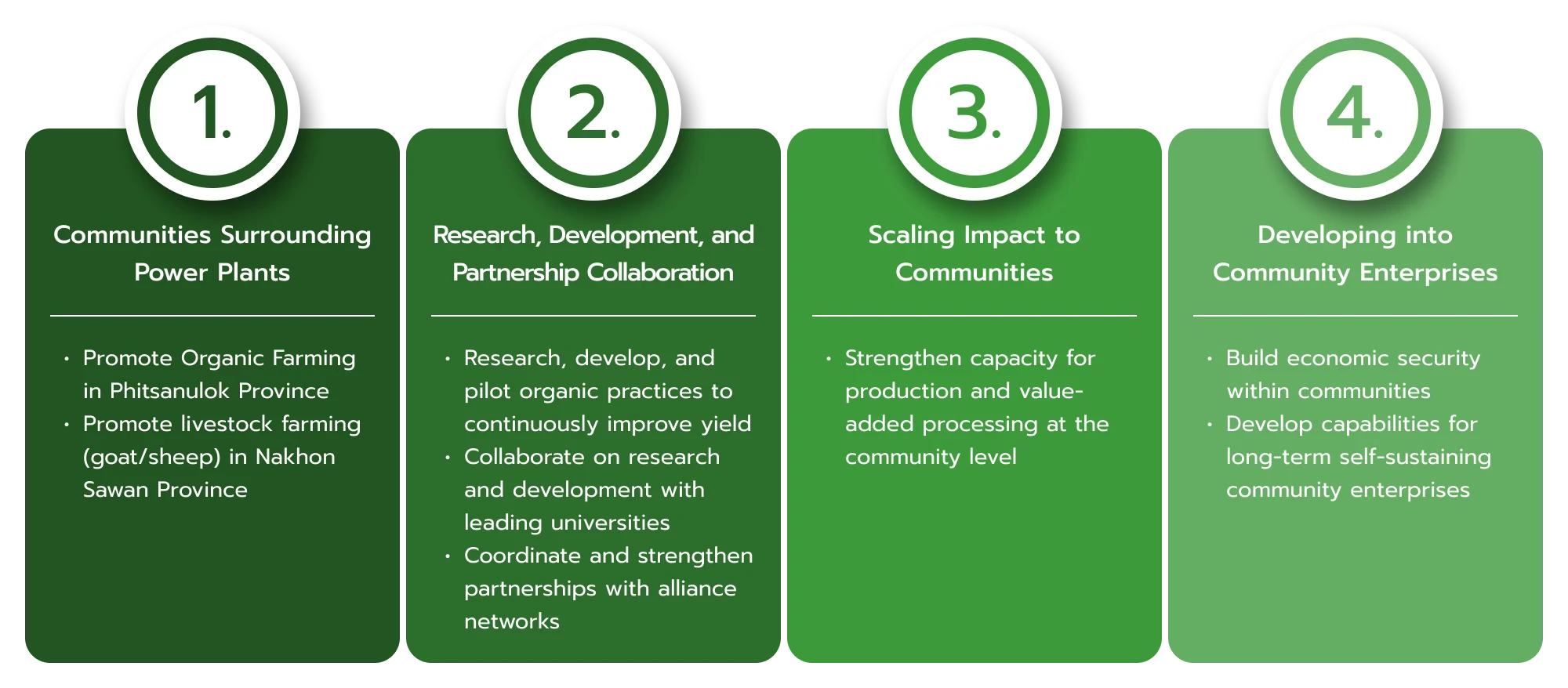
All programs are designed to promote full upstream-to-downstream farmer participation, fostering shared Ownership, generating Shared Value, and driving Social Innovation. EASE drives end-to-end farmer engagement through a 4-stage process:
Community Management Processes and Measures
Impact Due Diligence:
Community engagement and impact assessment processes have been implemented across 100% of the Group's business operations.
For emerging business units in the construction phase, Pre-Project Risk Screening is conducted to identify affected communities, vulnerable groups, and potential grievance triggers (such as noise, odor, and dust), prior to entry into the IEE (Initial Environmental Examination) and EIA (Environmental Impact Assessment) processes.
Grievance Mechanism:
The Group has established a formal grievance intake plan covering all operational complaints, with clearly defined responsibilities at each process stage and detailed process flowcharts. Stakeholder communications ensure that all complaints are resolved and traceable with full transparency.
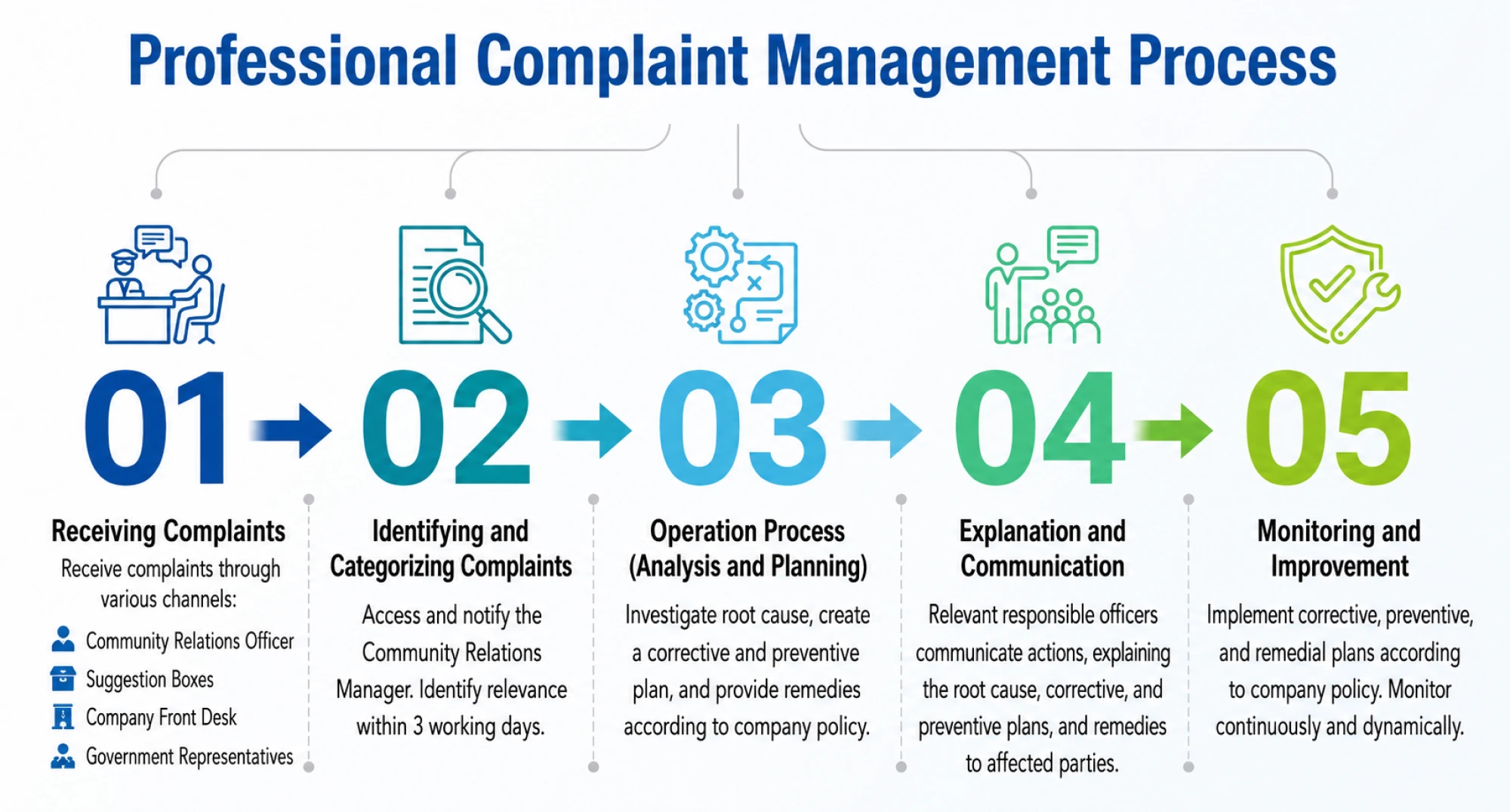
- Grievance Channels: Multiple grievance submission channels are available, including telephone, electronic communications, written correspondence, and on-site security posts, supported by a systematic recording and follow-up tracking system. This ensures that all complaints are considered transparently and equitably, and that responses genuinely address the expectations of surrounding communities.
- Process: Community relations officers will conduct fact-finding to report to relevant departments, in order to develop appropriate plans for corrective action, improvement, and remediation for those affected.
- The Group is committed to avoiding all forms of human rights violations and adverse community impacts. In 2025, no incidents of human rights violations or material negative community impacts were recorded during the reporting period.
Case Study/Success Stories
Strengthening Economic Security and Community Enterprises
The Group focuses on building economic security through community capacity development, with an emphasis on fostering community co-ownership of projects.
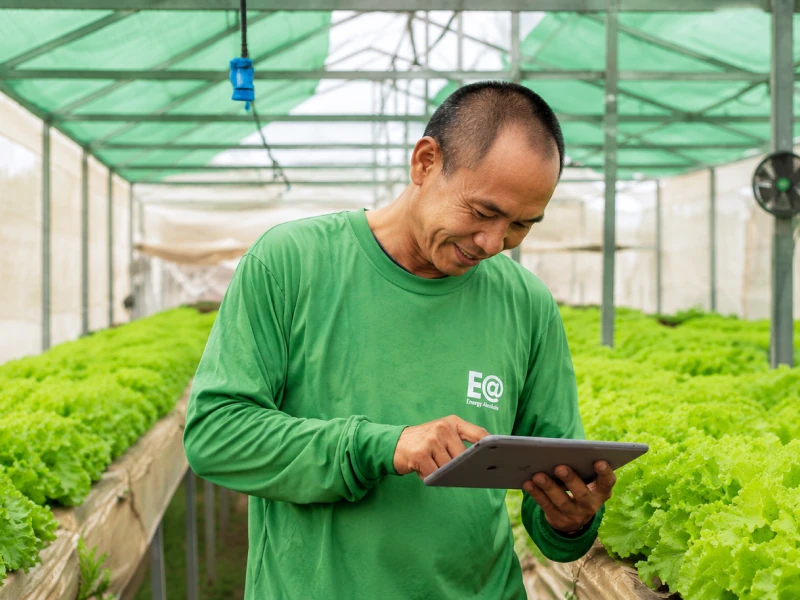
Smart Farm Project
The organic farming smart agriculture initiative in Phitsanulok Province has developed intelligent farming systems incorporating income guarantees for farmers to secure livelihood stability, generating aggregate community income exceeding 1.1 million THB per annum.
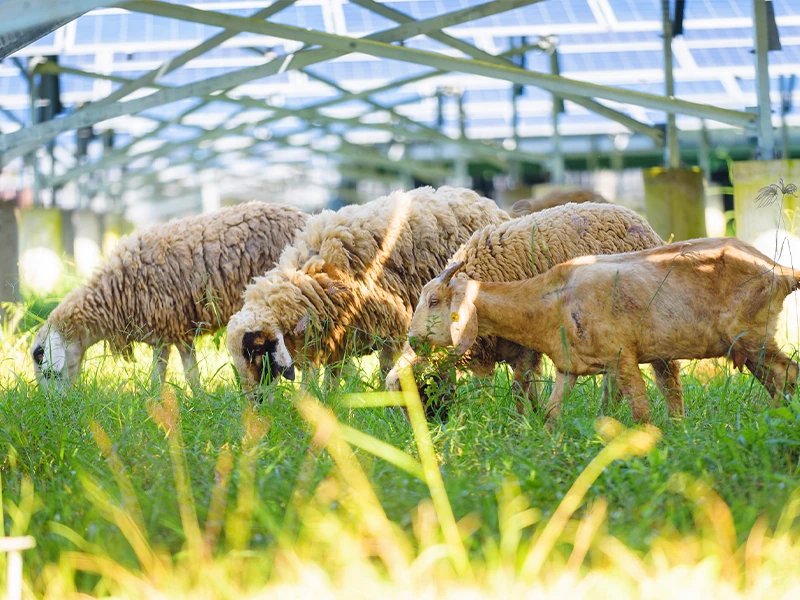
Goat and Sheep Farming Project (Nakhon Sawan Province):
Rising market prices driven by supply-demand dynamics have reinforced farmer confidence in the viability of the occupation. Plans are underway to further improve sheep breeds in the current year. The program also focuses on nurturing Young Smart Farmers among the next generation of local farming families, equipping them with knowledge and skills in sustainable organic farm management, introductory business and marketing practices, and the application of modern innovation and technology in organic agriculture.
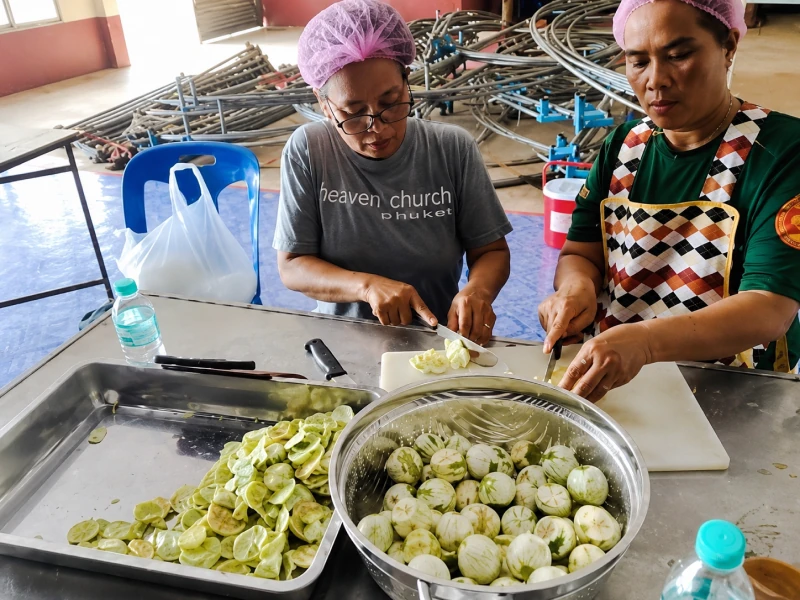
Driving Community Enterprises:
The company group has promoted and driven the establishment of Community Enterprises (Community Enterprise Development). A 7-member enterprise has been established, generating aggregate income of THB 12,000 for the community. These efforts contribute to improving quality of life and sustainable well-being, with communities expanding enterprise membership and various types of their product.
Workforce Development, Future Skills, and Human Capital Building

Workforce Skills Development:
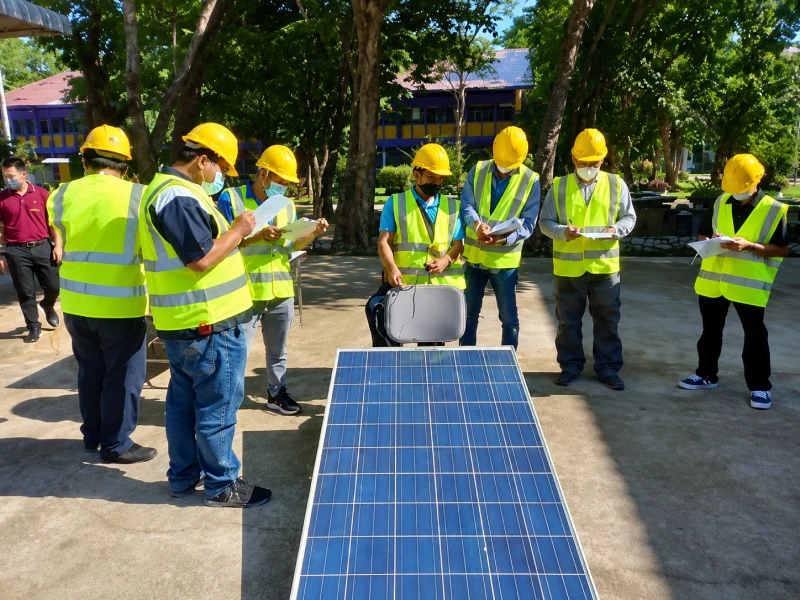
A clean energy skills development program, implemented in collaboration with the Department of Skill Development to establish a Green Learning Center, delivers hands-on training in solar panel system installation. The program delivered tangible results in the past year, with 217 total participants. Follow-up tracking indicates that 80% of trainees have successfully applied their knowledge to generate income and develop sustainable careers. The initiative strengthens the supply of skilled workers entering the clean energy labor market and supports the country's sustainable energy transition.
Weaving Vocational Training Centre Promotion (Rayong Province):
A community enterprise weaving vocational training program that preserves local wisdom and traditional craftsmanship, conducted in collaboration with WHA Eastern Industrial Estate (Map Ta Phut) and the Faculty of Liberal Arts, Burapha University.
Improving Quality of Life, Well-being, and Educational Opportunity:
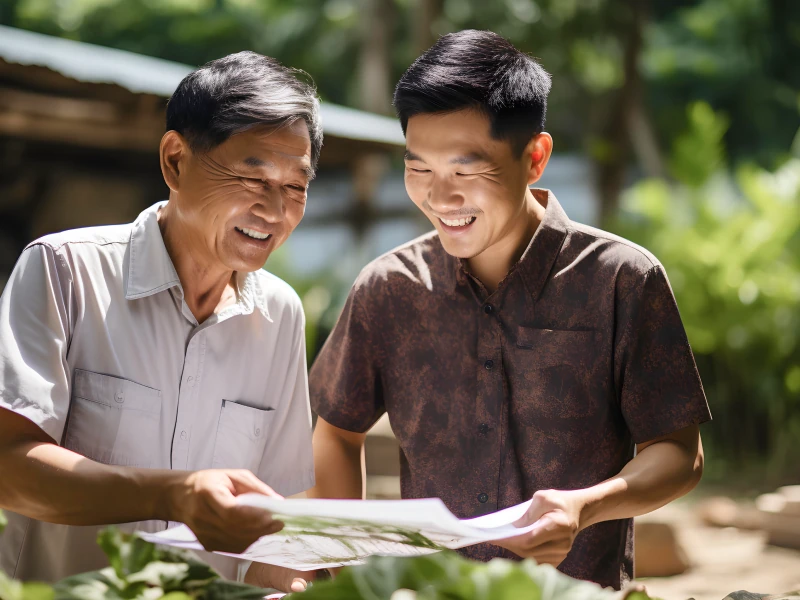
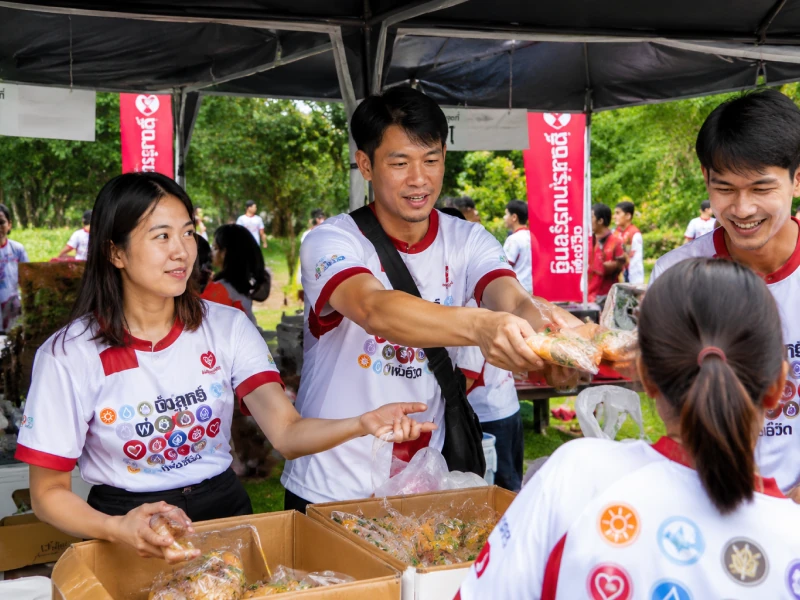
Nutrition and Experiential Education

Access to Healthcare Services:
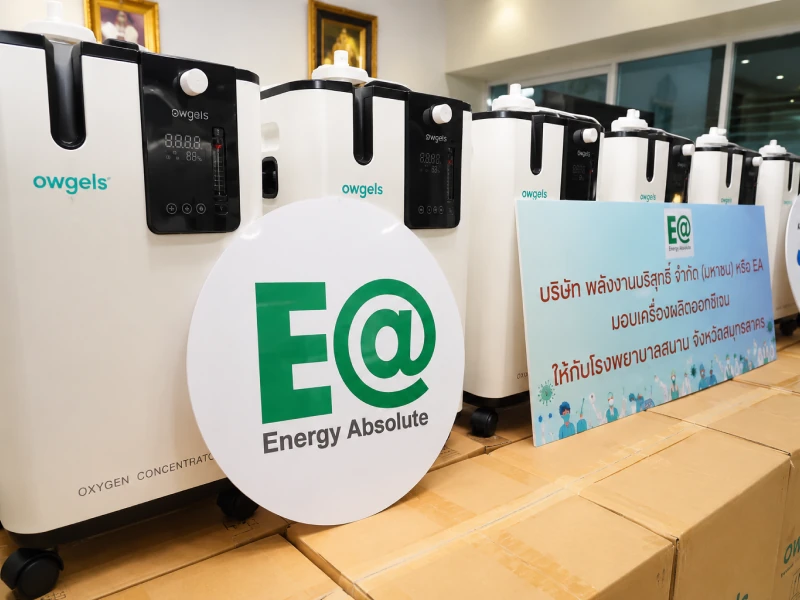
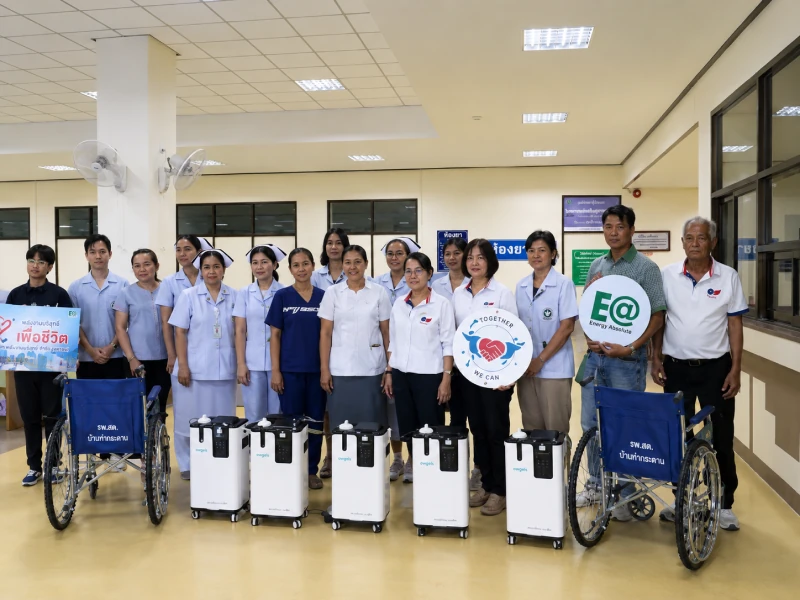
The Group is committed to improving access to public health services. In 2025, a total budget of over 1.6 million baht was allocated for donation through the Pure Heart Foundation, which serves as a strategic intermediary in managing and distributing resources to underfunded hospitals and medical facilities across the country. The budget was utilized to replace Molecular Sieve absorbents in 100 oxygen concentrator machines, enhancing their efficiency in providing continuous support to underprivileged patients. This investment stands as a significant testament to the integration of financial dimensions with the creation of positive Social Impact, in order to promote the sustainable well-being of the population.
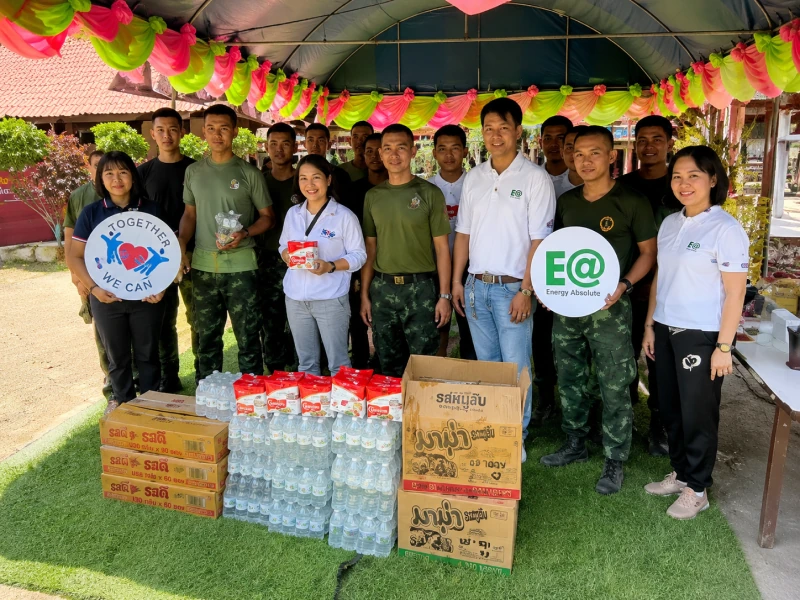
Environmental Conservation and Biodiversity
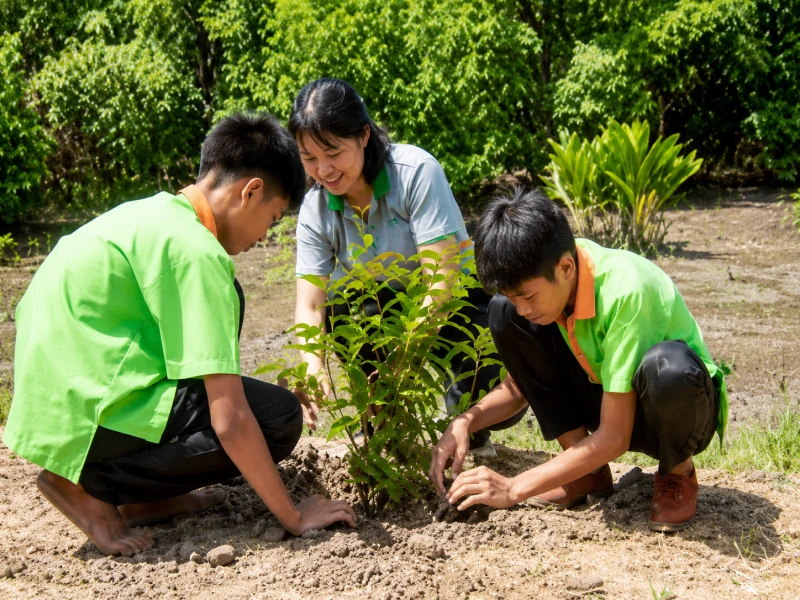
Green Area Expansion
The EA Forest Conservation Program (EA Rak PA) has achieved cumulative tree planting of 10,136 trees as of 2025, representing 31.675% progress toward the target of 32,000 trees. All selected species are non-invasive and non-alien, ensuring ecological compatibility with local ecosystems, reducing environmental risk, and maximizing the long-term effectiveness of green area restoration. These efforts reflect the Group's commitment to sustainable environmental stewardship, guided by principles of landscape impact minimization, biodiversity conservation, and the creation of a healthy environment for communities surrounding its operational areas.
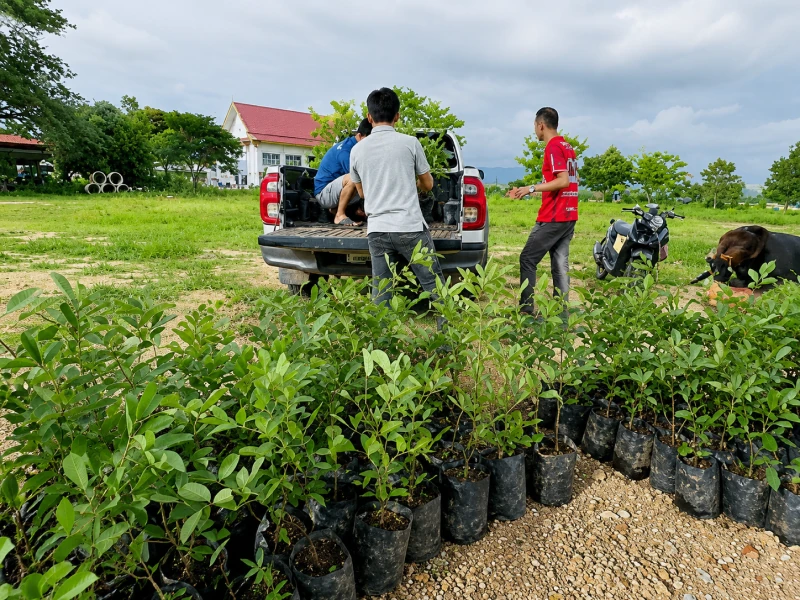
Marine Conservation:
The "Green Blade" project (wind power plant, Nakhon Si Thammarat Province), implemented in partnership with the local fishing association, involved the installation of artificial reef structures and the release of 1 million mud crab juveniles into the Gulf of Thailand, creating aquatic nursery habitats, refuge areas, and food security resources, while generating community income and strengthening community participation in the sustainable conservation and restoration of marine and coastal resources.
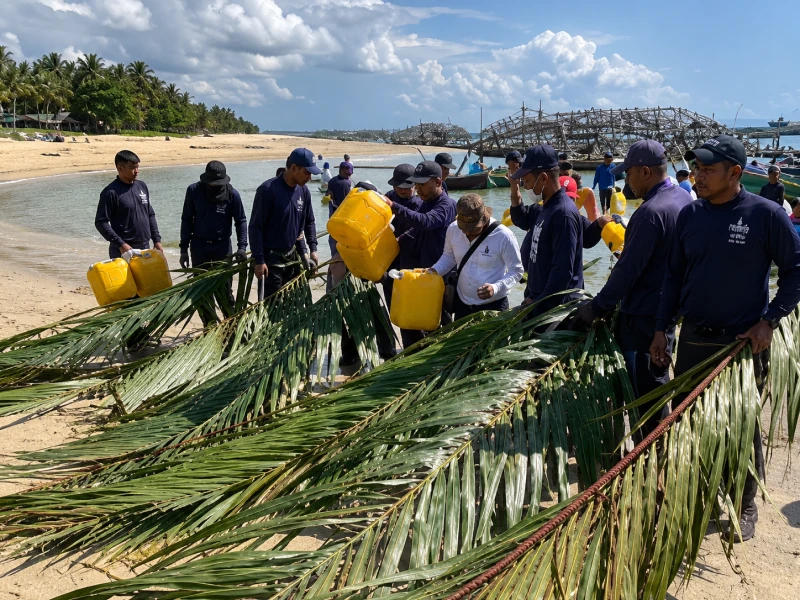
Sustainable Livestock:
A project supporting the provision of chemical-free green grass to livestock farmers in the community, totaling 3,060 kilograms, to enhance animal feed security and reduce the risk of chemical residues. This enables farmers to utilize it as high-quality animal feed, reduce dependence on external raw materials, and minimize the risk of residues in the food chain.
Stakeholder Engagement
Management Approach
The Group is committed to conducting systematic and continuous Stakeholder Engagement to:
Proactive Engagement, transparent communication, and timely responses enable the Group to accurately identify material issues, leading to the development of ESG strategies that meet social expectations and promote business growth alongside the long-term sustainability of communities and the environment.
For further information, please refer to
